What Chesed Room Volunteers See on Their Weekly Rounds
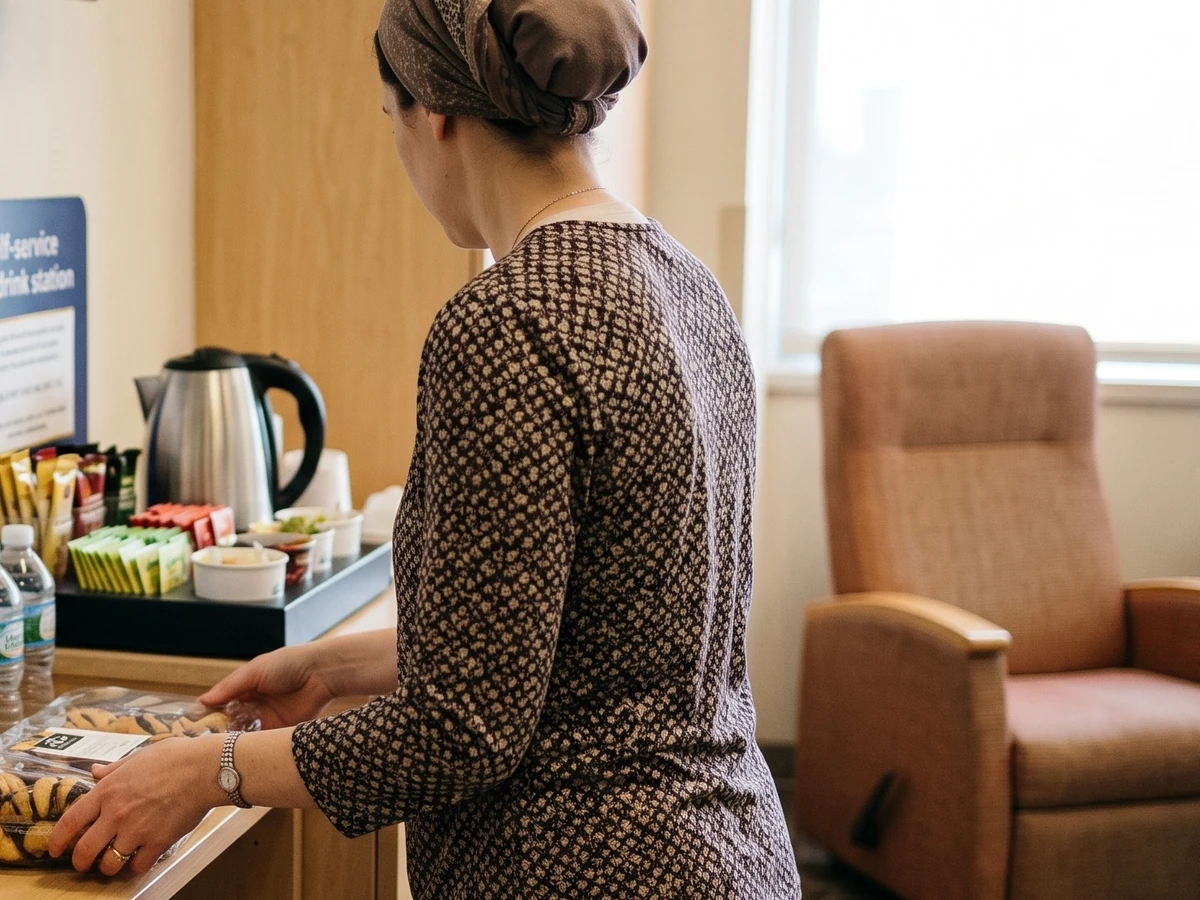
It's a Sunday morning in Brooklyn, and one of our volunteers is driving into Manhattan for her shift at the Chesed 24/7 room at Cornell. The trip is 45 minutes each way with light traffic. She's been doing this since November. Her friend, who started with her, got engaged over the summer, so her sister took over — and now the two of them alternate weeks.
She is one of many volunteers who maintain the Chesed rooms at hospitals across the region. There are rooms at Weill Cornell and Memorial Sloan Kettering, at Mount Sinai, at Columbia, at Hackensack Medical Center, and at other hospitals across New York and New Jersey. Each one has a small team of women who come in on a weekly or biweekly rotation to make sure everything is stocked, everything is clean, and nothing has been forgotten.
The Drive
The women who maintain our rooms don't live next to the hospitals they serve. One drives 45 minutes each way to Cornell from Brooklyn. Another drives two and a half hours to Mount Sinai from Brooklyn. Another lives 15 minutes from Hackensack Medical Center and considers herself lucky. What they share is the choice to spend a piece of their week traveling to a place they will only ever visit as a volunteer.
Most of them started because they wanted to do a chesed and didn't know exactly what. One went on our website when she was bored one afternoon and asked what needed doing. Another was recruited by a friend and stayed on after that friend moved on to something else. A third was home from seminary and looking for something meaningful that would fit around her schedule.
What They Do When They Arrive
A shift at a Chesed Room usually takes between fifteen minutes and half an hour, depending on how full the room is and how much needs tidying. Sweep. Wipe down the tables. Refold anything left messy. Check the water cooler. Check the coffee bar. Note down what's running low.
The list of what's supposed to be in the room is long. Fresh bottled water. A choice of hot drinks with sugar, sugar-free packets, Splenda, and Truvia. Mouthwash and toothpaste for caregivers who may not have thought to pack a toothbrush. Straws. Chargers for phones. Cleaning supplies for anyone who wants to tidy the room themselves. A map to the nearest shul. Games and books for children stuck in the hospital with siblings. Every package on the Shabbos shelf carries a personalized note.
"People don't realize all the ins and outs that go into it," one of our Cornell restockers said. "It's not just enough to get by. Every little detail is thought of."
What They Notice
The volunteers who come in each week become the eyes and ears of the room. They notice when the popular flavor of chips has been gone for a few days, when a caregiver has asked twice for a specific brand of coffee, when the recliner needs replacing, when a family that arrived overnight has already emptied half the shelves. They send an email to the office and someone follows up. Men from the warehouse come to restock. Whatever was missing usually gets replaced within a day or two.
They also notice the families who use the room — not by watching them, but by walking in on them. A mother who came up during Shabbos and hadn't known what she would find. A father who had been at the hospital for four days and hadn't eaten properly since he left home. A grandmother in her chair by the window who came to keep the family company and stayed for the whole week.
One of our volunteers spoke about a Shabbos she once spent at a hospital with an aunt who was not observant. "The room was so helpful," she said. "We were able to give her kosher even if she hadn't been careful all along." She said it quietly, like it was one of the smaller stories the room had produced that week. It was not.
Pesach Turnover
Between the ordinary weeks are the extraordinary ones. Before Pesach, every Chesed Room is completely emptied, cleaned, covered, and restocked from scratch with everything a family observing Yom Tov in the hospital might need. Kosher-for-Pesach products of every kind: mini cream cheeses, ices, snacks, cereals, regular and decaf coffee — anything a family that arrived without warning might have brought from home. It takes volunteers full days of work to prepare each room.
"The amount of work volunteers had to do to turn the place over was so impressive," one of our restockers said afterward. "So many different products. Anything you could need." Another added: "So busy erev Pesach, and people took the time to make Pesach for others in need."
The Volunteers Who Follow Them
The women who maintain the rooms are one link in a longer chain. Behind them, at the Chesed 24/7 warehouse in New Square, other volunteers pack the boxes and prepare the products that will be restocked on their next shift. Ahead of them, on motzei Shabbos and throughout the week, other volunteers drive families to and from the hospital for appointments they could not otherwise reach. Every so often, on a Sunday morning drive back to Brooklyn, one of our restockers passes a Chesed 24/7 van heading the other way.
The Reason They Keep Coming
Ask them why they keep coming, and the answers are usually short.
"I feel accomplished doing for others."
"You see how much people care that a stranger should feel less alone."
"It's a privilege to be on the giving side."
"I see Klal Yisroel in a beautiful light. Mi kamocha Yisroel."
They will tell you that the rooms are quietly extraordinary. That every detail is thought of, and that the families who walk into them are usually amazed. That the small things — a chip flavor, a sugar substitute, a note — are what people remember later. That the whole system holds together because everyone chose to be part of it.
Then they'll get back in the car and drive home.
[[cta]]






.svg)