Behind the Scenes: How Chesed 24/7 Prepares Hospitals and Families for Pesach
How Chesed 24/7 ensures that no Jewish patient or family faces Pesach in a hospital alone: Providing kosher l’Pesach food, Seder essentials, and fully prepared Pesachdik spaces with dignity and care.

Pesach is one of the most demanding Yomim Tovim of the year. It requires extensive preparation, planning, and coordination, and by the time the Yom Tov arrives, every detail must already be in place—from matzah and wine to a ke’arah and all the essential items needed to properly sit down to the Seder and observe the chag. Even for families at home with full kitchens and weeks to prepare, it is a significant undertaking.
Now consider the challenge of preparing for Pesach while dealing with a medical situation. The focus is on care, recovery, and navigating an unfamiliar environment, yet the obligation to observe a kosher l’Pesach Seder and Yom Tov seudos remains. Without access to a kitchen or the ability to prepare or obtain the necessary items, even the basics—matzah, wine, and a proper ke’arah—can be difficult to arrange, making it far more challenging to observe the Yom Tov in a hospital setting.
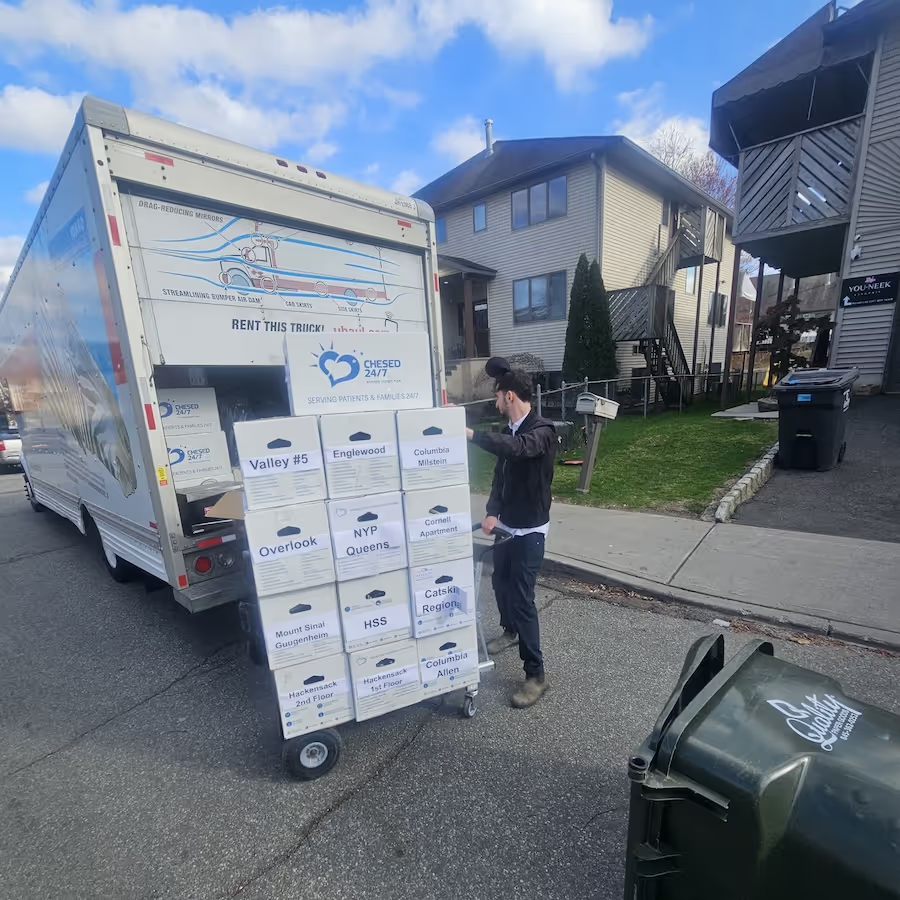
That is exactly where Chesed 24/7 steps in. Every year, as Pesach approaches, our team quietly launches one of the most complex seasonal operations we run, coordinating Pesach supplies, kashering, ke’aros, emergency bags, kosher l’Pesach food, and volunteer logistics across hospitals in New York and New Jersey—so that no patient or family has to face the Yom Tov alone or unprepared.
Key Takeaways
- Chesed 24/7 coordinates comprehensive Pesach support for hospitals and families, including kosher l’Pesach meals, ke’aros (Seder plates), Shabbos in a Box Pesach editions, and emergency Pesach bags, ensuring patients can observe Yom Tov properly even while hospitalized.
- Preparation for Pesach in a hospital requires specialized planning since standard hospital menus and facilities may contain chametz or kitniyos, necessitating certified kosher l’Pesach products.
- Volunteers play a critical role, assembling ke’aros, kashering chesed rooms and kitchens, removing chametz, and preparing chesed apartments so families have access to fully Pesachdik spaces for Yom Tov.
- All Pesach services provided by Chesed 24/7 are available at no cost, sustained entirely through community donations and volunteer support across New York and New Jersey hospitals, reflecting a coordinated effort to care for patients and families during a particularly challenging time.
How Chesed 24/7 Prepares Hospitals and Families for Pesach
Pesach preparation logistics for hospital settings look nothing like what happens at home. There is no lining of shelves, no burning of chametz in the backyard, no bedikas chametz the night before with a father leading children through the house by candlelight. What there is, but, is a set of very real, very pressing needs, and a coordinated effort by Chesed 24/7 to meet them.
The weeks leading up to Pesach are among the busiest in our annual calendar. Our staff and volunteers begin preparation well in advance, working through a checklist that touches every layer of hospital support we provide: food, supplies, spiritual items, and emergency readiness.
The Reality of Pesach in a Hospital
For a Jewish patient in a New York or New Jersey hospital during Pesach, the challenges are immediate and practical. Standard hospital food options generally cannot be relied upon for Pesach use, and there are many specific requirements for the Seder and Yom Tov meals—such as matzah, wine, and other essential items—that are not readily available in a hospital setting. At the same time, a family member staying nearby may have limited ability to prepare or access a proper Yom Tov meal. All of this often takes place while they are focused on the care of a loved one facing a serious medical condition, adding another layer of complexity to an already difficult situation.
Pre-packaged kosher-for-Pesach meals with proper certification on sealed packaging are essential for Torah-observant patients, who cannot rely on the standard hospital food service during Yom Tov. Chesed 24/7 works to bridge that gap wherever possible within our service areas.
What We Provide for Pesach
Our Pesach preparation effort covers several distinct areas, each with its own logistics and timeline.
Kosher l'Pesach Food and Supplies
In the weeks before Yom Tov, we stock our hospital-based hospitality rooms with kosher l'Pesach food items. This includes shelf-stable products, Pesach-certified snacks, and Yom Tov essentials that patients and family members can access throughout the holiday. Wherever possible, we coordinate with local volunteers and food preparation groups to ensure that warm Yom Tov meals reach families staying near the hospital.
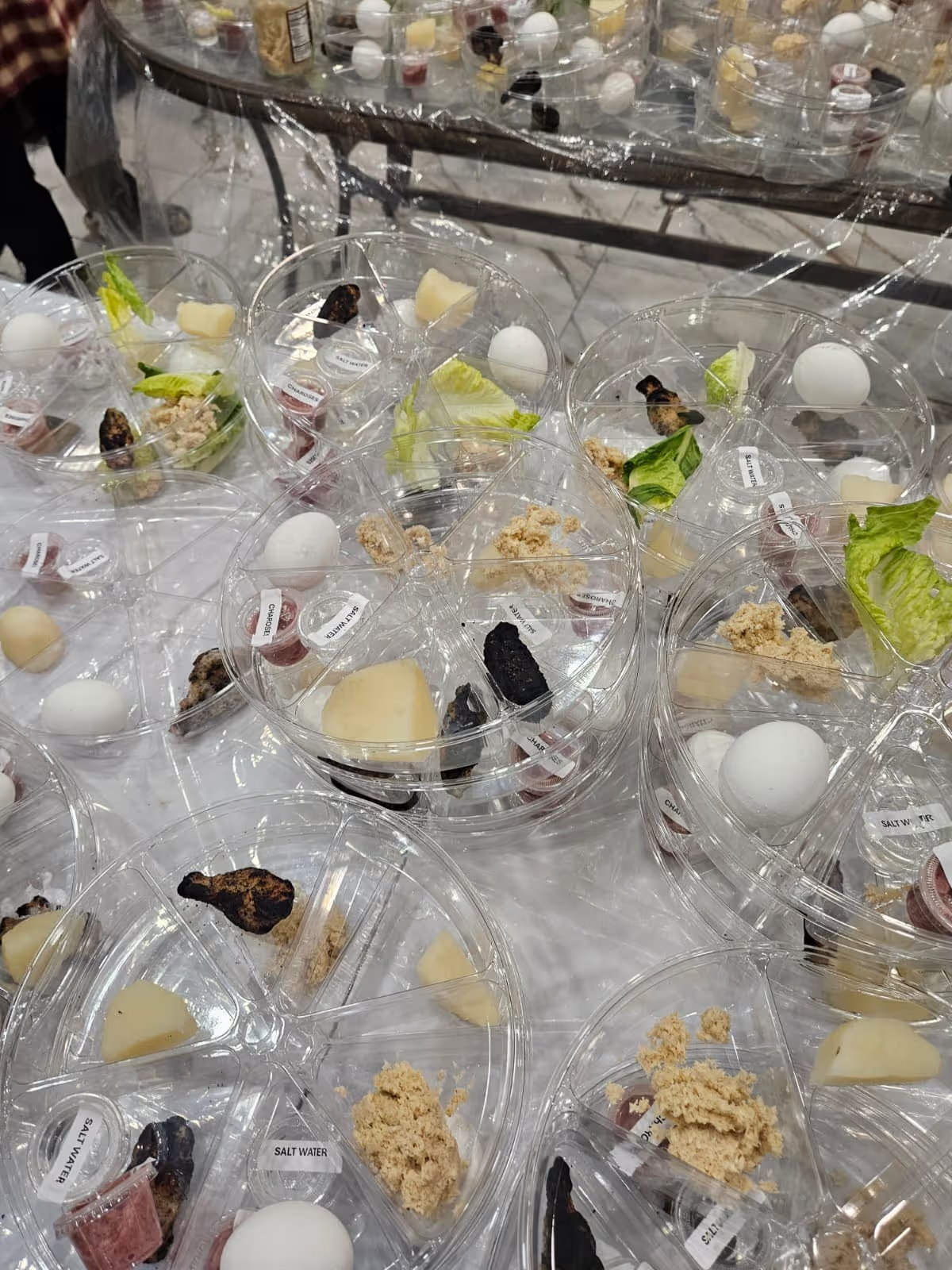
For Seder night specifically, we work to make sure that families who cannot be home are not without the basics: matzah, maror, charoses, and the items needed to fulfill the mitzvos of the night. We do not promise the same Seder table they would have at home, but we do everything we can to bring a measure of kedushah and normalcy into the Seder night.
Ke'aros, Pesach Seder Plates
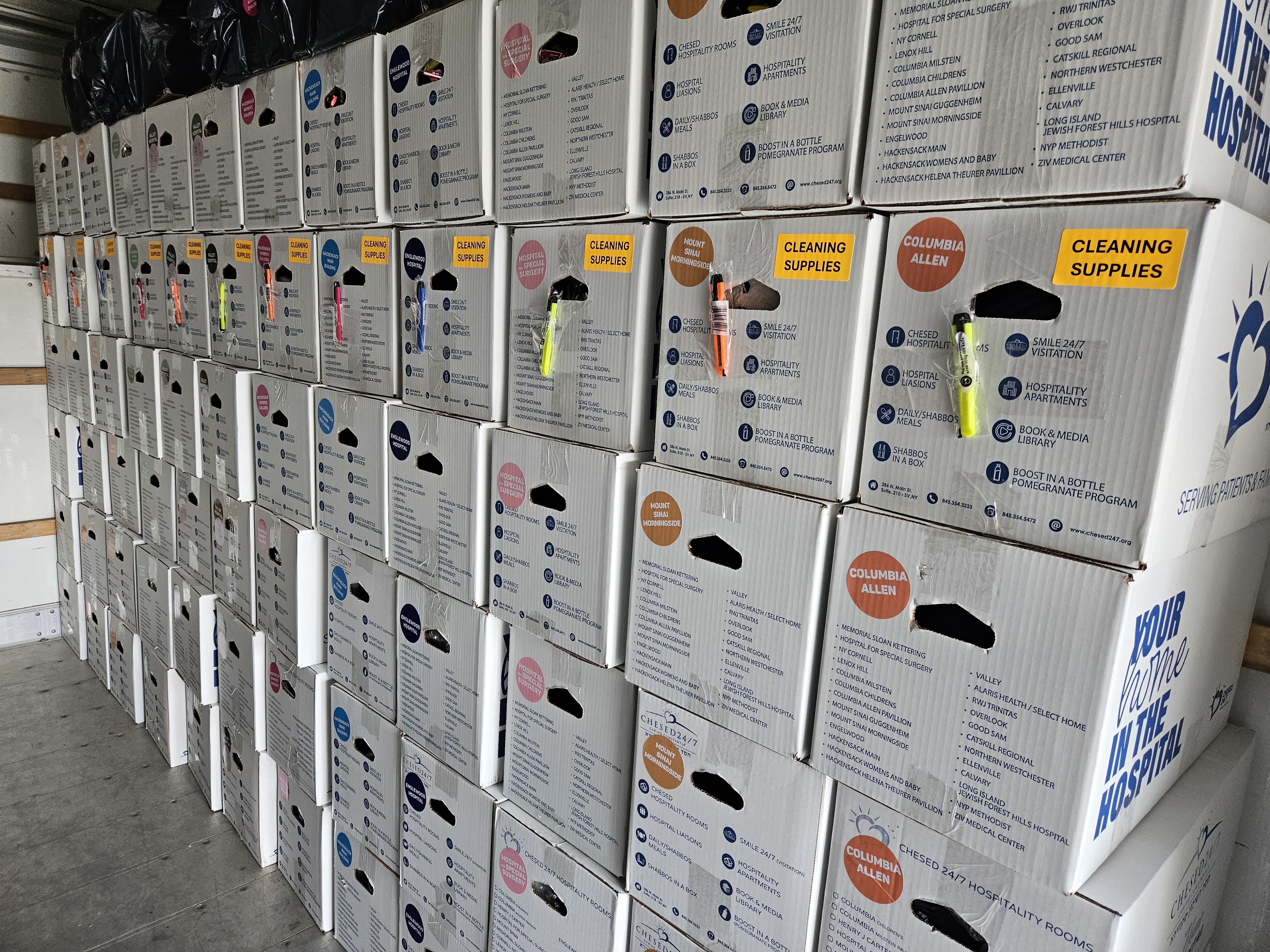
One of the more visible parts of our Pesach preparation is the assembly of ke'aros, Seder plates, for patients and families in our service area. Volunteers prepare and distribute ke'aros containing the required components: zeroa, beitzah, maror, charoses, karpas, and chazeres. This is a hands-on chesed project that many volunteer groups and schools participate in each year, assembling hundreds of Seder plates that are then delivered to hospitals and distributed to families in need.
Kashering Hospital Chesed Rooms
A crucial part of Pesach preparation in hospitals is ensuring that any on-site kitchen or chesed room is fully kosher l’Pesach. Chesed 24/7 coordinates teams of trained volunteers who visit each hospital in the weeks leading up to Yom Tov to clean and kasher these spaces. All chametz is removed, counters and sinks are prepared according to halacha, and cooking or serving areas are made ready for Pesach use.
This work ensures that patients and families staying in hospital chesed rooms can access kosher l’Pesach facilities for preparing or storing food, holding meals, or using utensils without concern. It is a behind-the-scenes effort that requires meticulous attention to detail, halachic knowledge, and careful coordination with hospital staff, but it is essential to enabling families to observe the holiday even while in a medical setting.
Preparing Chesed Apartments for Pesach
Throughout the year, the chesed apartments used by families of hospitalized patients are maintained by a professional cleaning crew, who visit weekly to ensure the spaces remain tidy and welcoming. As Pesach approaches, this routine maintenance is expanded into a thorough, deep clean, preparing the apartments for Yom Tov use.
In addition, volunteers step in to kasher the kitchens, remove all chametz, and make the apartments fully pesachdik. Countertops, sinks, stoves, and utensils are carefully prepared according to halacha, ensuring that families can cook, serve, and enjoy Yom Tov meals with confidence. This coordinated effort allows families to observe Pesach properly even while away from home, providing both practical support and a sense of normalcy during a challenging time.
Shabbos in a Box, Pesach Edition
Our Shabbos in a Box program, which provides Shabbos essentials to patients and families throughout the year, receives a Pesach update in the weeks before Yom Tov. The standard box is adjusted to be fully kosher l'Pesach: non-Pesachdik items are removed and replace with Pesach-certified products instead. The goal is the same as it is every Shabbos: that a family in a hospital room should not have to enter Yom Tov without the basics.
For more on how our ongoing seasonal support works and how families have used these resources, our community support blog covers a range of real-world situations and service updates throughout the year.
Hatzolah Emergency Pesach Bags
Chesed 24/7 also coordinates with Hatzolah in preparing emergency Pesach bags for patients who are transported to hospitals unexpectedly during Yom Tov. A family rushing to the emergency room over Pesach has no time to grab matzah. These emergency bags, pre-packed with the essentials needed to observe as much of the Yom Tov as possible, are available for situations where there is simply no time to prepare.
The Volunteers Behind the Pesach Effort
None of this happens without people. The ke'arah assembly, the packing of Shabbos in a Box Pesach editions, the coordination of deliveries to multiple hospitals across NY and NJ, all of it requires coordinated volunteer effort in the weeks leading up to Yom Tov.
Volunteers take part in preparing the ke'aros and packing supplies. These are not passive contributions, this is careful, halachically informed work, done under coordination and with attention to detail. Kosher L'Pesach food is a strict requirement for Jewish families, and participating in this preparation is a genuine zechus.
How This Fits Into Chesed 24/7's Year-Round Mission
Pesach preparation is one concentrated expression of what Chesed 24/7 does every day of the year. The infrastructure, the hospitality rooms, the food supply chains, the volunteer networks, the coordination with hospitals across New York and New Jersey, exists year-round. What Pesach requires is recalibrating that infrastructure to meet the specific demands of the Yom Tov.
Every year, patients spend Pesach in hospitals. Some knew in advance: many did not. Our job is to make sure that wherever they are, they are not without support, without food, without a ke'arah, and without the warmth of a community that remembers them, even from a distance.
All of our Pesach services, like everything Chesed 24/7 provides, are available at no cost to patients and families. These programs are sustained entirely through donor support. Those who wish to make it possible for a family to have a ke'arah on their hospital table this Pesach, or matzah on Seder night, can support this work by reaching out to us directly or through the Chesed 24/7 website.
For questions about Pesach support availability at a specific hospital, or to request supplies for a patient in our service area, contact us at any time. That is what 24/7 means.
Frequently Asked Questions About Pesach Hospital Preparations
What does Chesed 24/7 provide for Pesach hospital preparations?
Chesed 24/7 coordinates kosher l'Pesach food, ke'aros (Seder plates), Shabbos in a Box Pesach editions, emergency Pesach bags, and volunteer logistics across hospitals in New York and New Jersey. All services are provided at no cost to patients and families in the service area.
How can patients observe Pesach properly in a hospital setting?
Hospitals must provide pre-packaged, certified kosher l'Pesach meals instead of regular menus. Patients should consult both their physician and rabbi about medications, arrange storage for perishable items, and coordinate discharge timing before Yom Tov when possible to avoid complicated logistics.
What are emergency Pesach bags and when are they used?
Emergency Pesach bags, coordinated with Hatzolah, are pre-packed with essentials for patients who unexpectedly arrive at hospitals during Yom Tov. They contain basics needed to observe core Pesach mitzvos and serve as a safety net when families have no time to prepare.
Can patients take medications during Pesach, and do hospitals know about this?
Some medications may contain chametz or Pesach-restricted ingredients, so patients must consult both their physician and rabbi individually—there's no one-size-fits-all answer. This requires personal halachic guidance before Yom Tov begins.
How do volunteer groups participate in Pesach hospital preparations?
Volunteers from schools, shuls, and women's groups assemble ke'aros, pack Shabbos in a Box Pesach editions, and coordinate deliveries across hospitals. This careful, halachically informed work is professionally coordinated and represents a meaningful community zechus during the holiday season.
Why is discharge timing important for patients during Pesach?
Coordinating discharge before Friday or the first night of Yom Tov significantly reduces logistical stress and avoids complicated Shabbos or Yom Tov arrangements. Early coordination with the medical team helps prevent difficult last-minute situations for families managing both medical care and holiday observance.
[[cta]]





.svg)