Where Families Spend Their Time in the Hospital
Where families actually spend their time during a hospital stay — bedside, waiting areas, corridors, and chapels — and how 34 Chesed Rooms across 28 hospitals give them a real place to rest.
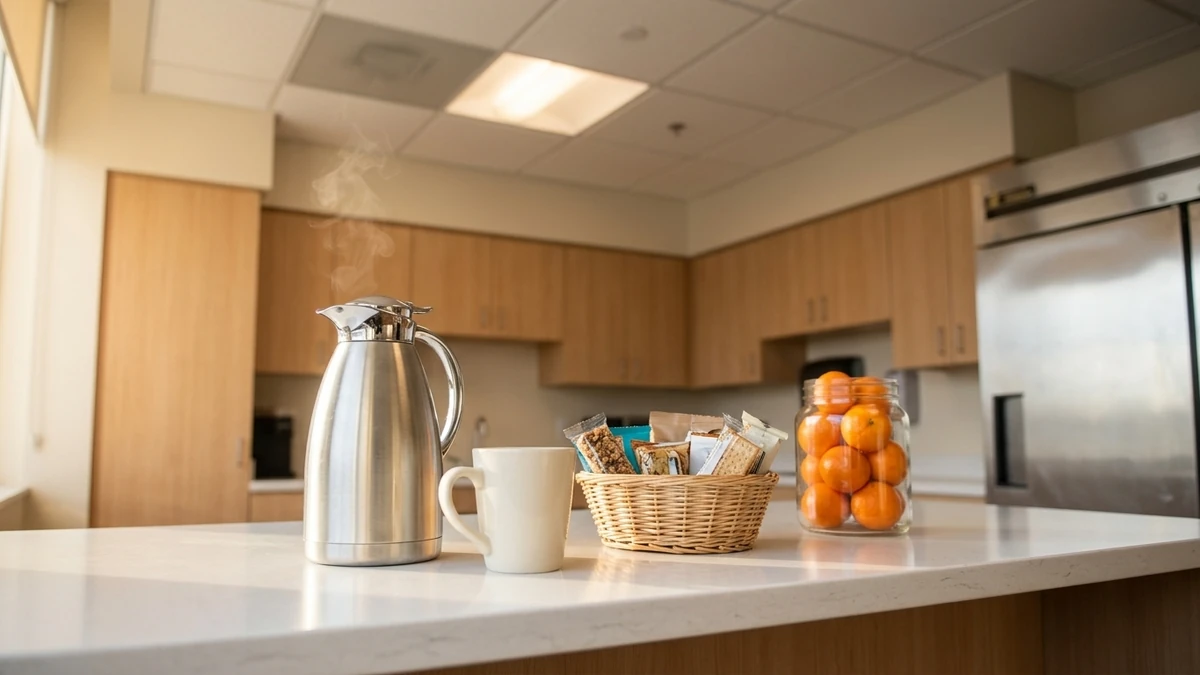
Families with a loved one in the hospital spend hours, sometimes days, looking for places to be. Hospital waiting areas for families are usually loud, crowded, and built for short visits — not the long stretches families actually face. Chesed Rooms are built for the gap. Chesed 24/7 operates 34 Chesed Rooms across 28 hospitals in New York and New Jersey, providing a kosher-friendly space for the hours families need somewhere to be.
Where Families End Up Spending Time
A typical hospital admission gives a family a small set of physical options. None of them are designed for sustained stays.
General waiting rooms. Open to everyone in the hospital. Usually crowded. Television on. Conversations overlapping. The chairs are not made for sleep, and there is no real privacy.
Patient rooms. A family member can sit beside the patient — but only one or two visitors are usually allowed at a time, and the patient often needs to rest. Standing in a patient room for six hours is exhausting in a different way than sitting in a hallway.
Hallways. Where many family members end up by default. There is nowhere to put down a coat. Nowhere to charge a phone reliably. Nowhere to take a private call.
Hospital cafeterias. Open during fixed hours. Closed at night and on holidays. Kosher options are usually limited or non-existent.
Outside the building. Some families take walks or sit on benches when weather allows. This works for short breaks but not long ones, especially in winter.
For a family in the first day of an admission, family waiting hospital options often look like this: rotate through a waiting room, a hallway, the cafeteria, and the patient's bedside, depending on what is open and where there is a chair available. By hour eight, every chair feels uncomfortable and every hallway looks the same.
What a Chesed Room Is
A Chesed Room is a calm, kosher-friendly hospitality room located inside or right next to a hospital. It exists so Jewish patients and families have a real place to be during a hospital stay — beyond the standard hospital lounge family members get pushed toward.
Each Chesed Room is open at no cost to anyone using it. No registration is required. Most rooms are accessible 24 hours a day, depending on individual hospital policy. All food is kosher-certified, restocked daily by volunteers and staff.
What Is Inside
Typical Chesed Room amenities include:
- Kosher snacks and drinks
- Hot water urn, coffee, tea, and sweeteners
- Soup cups and light meals
- A refrigerator and microwave (where the hospital allows)
- Comfortable, clean seating
- Phone-charging stations
- Seforim and reading material
- Basic Shabbos and Yom Tov supplies, hospital-approved
- A quiet, respectful space to sit or say Tehillim
Configurations vary slightly by hospital because each facility has different rules and layouts. Some rooms include space for a quick break and a hot drink; others are larger and used by multiple families at once.
Where Chesed Rooms Are Located
Chesed 24/7 operates Chesed Rooms across the following regions:
- New York City — Manhattan, Brooklyn, Queens, the Bronx
- Long Island
- Rockland County, NY
- Orange County, NY
- Northern New Jersey — Bergen and Passaic counties
Specific hospitals with Chesed Room support include Mount Sinai, Memorial Sloan Kettering, Columbia, NewYork-Presbyterian, Hospital for Special Surgery, Lenox Hill, Hackensack University Medical Center, Englewood Health, Valley Hospital, Nyack, and others. The full list is on the Find a Hospital page. Some hospitals list the room on internal maps as "Family Hospitality Room" rather than "Chesed Room" — staff at the unit desk usually know exactly where it is.
Who Uses Chesed Rooms
Chesed Rooms are used by:
- Patients themselves, when they are mobile and want a change of environment
- Parents of hospitalized children
- Spouses and relatives staying long hours at a bedside
- Visitors caring for a loved one
- Anyone in the Jewish community who needs a kosher-friendly, quiet space inside the hospital
How Families Actually Use Chesed Rooms
A Chesed Room is rarely used as a destination. It is used in pieces, throughout the day, between everything else.
Between specialist visits. A family expecting a doctor at unpredictable hours can step into the Chesed Room for a hot drink and a few minutes of quiet, then return to the patient's floor.
During procedures. When a patient is in surgery or imaging, family members frequently spend the wait in the Chesed Room rather than the general waiting room. The space is calmer, the food is real, and the seating is built for longer stretches.
For meals. A family that does not bring food from home uses the Chesed Room for breakfast, lunch, supper, or all three. For a multi-week stay, the room becomes the family's de facto kitchen.
For Shabbos and Yom Tov. Many Chesed Rooms hold permitted Shabbos and Yom Tov supplies — candles, Kiddush items, a becher — and serve as the place where a family lights, makes Kiddush, and eats the Shabbos meal when staying near the hospital across the weekend.
For an emotional pause. When a family member needs to step away from the bedside without leaving the building, the Chesed Room is the only space inside most hospitals where that is genuinely possible.
Impact in Numbers
Specific scope of the Chesed Rooms program:
- 28 hospitals with active Chesed Room support across NY and NJ
- Daily restocking by volunteers and staff
- Free for anyone in the Jewish community who needs the space
- Most rooms accessible 24/7, subject to hospital rules
- 2,000+ active volunteers across the organization
- 24/7 phone line: (845) 354-3233
Stories From the Field
In a letter to Chesed 24/7 sent during a hospital stay, the writer described "the Chesed room is marvelous, always well stocked with everything one could need." The same letter mentioned signing up for nightly suppers (with a different menu each night), receiving a Shabbos package, finding small touches like added snacks, and using the shuttle service multiple times.
What makes the letter notable is the cumulative effect described. No single item — a meal, a Shabbos package, a snack, a shuttle ride — was the centerpiece. The Chesed Room functioned as a base of operations from which the writer accessed a coordinated set of services. That is how the room is meant to work: not as a single amenity, but as the place from which a family handles the rest of the stay.
How This Connects to Chesed 24/7's Larger Mission
Chesed Rooms are the most-used physical service Chesed 24/7 provides, and they are usually the first encounter a family has with the organization inside the hospital. From the room, families connect to the rest of the ecosystem: Chesed Apartments for sustained lodging, daily kosher hospital meals delivered bedside, Shabbos in a Box for weekly Shabbos essentials, hospital liaisons for advocacy inside the building, and hospital transportation between Rockland County communities and Manhattan hospitals.
Many families that use a Chesed Room during a short admission go on to use the rest of the system during a longer stay or a future hospitalization. The phone number stays the same: (845) 354-3233.
How You Can Get Involved
Find or Use a Chesed Room
Look for Chesed Room signs near elevators or main hallways. Ask any nurse or unit secretary, "Where is the Chesed Room?" Most staff at the supported hospitals know exactly where it is. To confirm in advance, call (845) 354-3233.
Donate
Chesed Rooms are sustained entirely through donor support. Sponsorship options exist at multiple levels — for example, $36 stocks snacks and drinks for one day in one room, $180 sponsors a full day in one hospital, $540 supports a room for Shabbos, $1,800 restocks the room for an entire week, and $10,000 or more dedicates a Chesed Room. Those who wish to support this work can donate or learn more about Chesed Room sponsorship.
Volunteer
Volunteer roles include daily Chesed Room restocking, food preparation, hospital meal delivery, and patient visits. Current opportunities are listed on the get involved page.
Frequently Asked Questions
Where do families wait in hospitals?
Families typically rotate between several spaces during a long admission: the patient's room (limited access and rest opportunity), general hospital waiting rooms (usually loud and crowded), hallways near the patient unit (no real seating or privacy), and hospital cafeterias (closed off-hours, kosher options usually limited). For Jewish families at the 28 hospitals where Chesed 24/7 operates, the Chesed Room is the most reliable space — calm, kosher, and stocked daily.
Are there places for families to rest in hospitals?
Most hospitals provide general waiting rooms, but these are not designed for resting. Chesed 24/7 operates 34 Chesed Rooms across 28 NY and NJ hospitals — kosher-friendly hospitality rooms with comfortable seating, hot drinks, snacks, phone-charging, and a quiet space to sit or say Tehillim. Most are accessible 24/7 at no cost.
What is in a Chesed Room?
Typical contents include kosher snacks and drinks, a hot water urn, coffee and tea, soup cups and light meals, a refrigerator and microwave (where allowed), comfortable seating, phone-charging stations, seforim and reading material, hospital-approved Shabbos and Yom Tov supplies, and a quiet space.
How do I find the Chesed Room in a hospital?
Look for signage near elevators or main hallways, or ask any nurse or unit secretary. Some hospital maps list the room as "Family Hospitality Room." To confirm in advance, call Chesed 24/7 at (845) 354-3233.
Are Chesed Rooms only for Orthodox families?
Chesed Rooms primarily serve the Jewish community and stock kosher-only food. Anyone in need of a quiet, kosher-friendly space is welcome to use the room. There is no registration or sign-in.
Are Chesed Rooms open 24 hours?
Most are accessible 24 hours a day, subject to each hospital's individual policies. Specific hours can be confirmed by calling (845) 354-3233.
[[cta]]





.svg)