The Women Behind the Meals: Chesed's Heroic Warehouse Crew
Every week, rotating groups of women gather at the Chesed 24/7 warehouse to chop, cook, and package hundreds of fresh kosher meals — quiet, steady work that becomes a lifeline for patients and families in hospitals across NY and NJ.

Every weekday morning, groups of women and girls gather at the Chesed 24/7 warehouse in New Square. They pull on aprons, wash their hands, and begin the careful, quiet work that will become breakfast, lunch, and dinner for hospitalized patients across the region. These are the warehouse volunteers, the food prep volunteers who keep our kosher hospital meals flowing, day after day, week after week. They don't wear uniforms or seek recognition. They simply show up, prepare food with dignity, and make sure that when a family calls Chesed 24/7 in crisis, there is always a fresh, warm meal ready to go.
Key Takeaways
- Hundreds of warehouse volunteers, mostly women, prepare fresh kosher meals and fresh packaged snacks daily for hospitalized patients and their families through Chesed 24/7.
- Each kosher meal prepared by volunteers ensures Jewish families are never without proper food during hospital stays.
- Anyone can join the warehouse volunteers nonprofit effort through individual participation, group rotations, or by sponsoring meals and spreading awareness of Chesed 24/7's services.
The Women Behind the Meals: Inside Chesed's Quietly Heroic Warehouse Crew
Our chesed warehouse operations run on something more powerful than logistics, they run on people. Specifically, they run on teams of volunteers, the majority of whom are women who lead daily food preparation groups. These volunteers form the backbone of our kosher meal program, transforming raw ingredients into nourishing, kosher meals for patients who cannot leave a hospital bed and families who cannot leave a bedside.
What Happens Inside the Warehouse
The warehouse itself is modest, clean, well-organized, and stocked with industrial kitchen equipment, pantry staples, and refrigeration units that hum quietly around the clock. What happens here is anything but modest. On an average week, volunteer groups prepare and package hundreds of meals. During Yom Tov or periods of high need, that number climbs significantly.
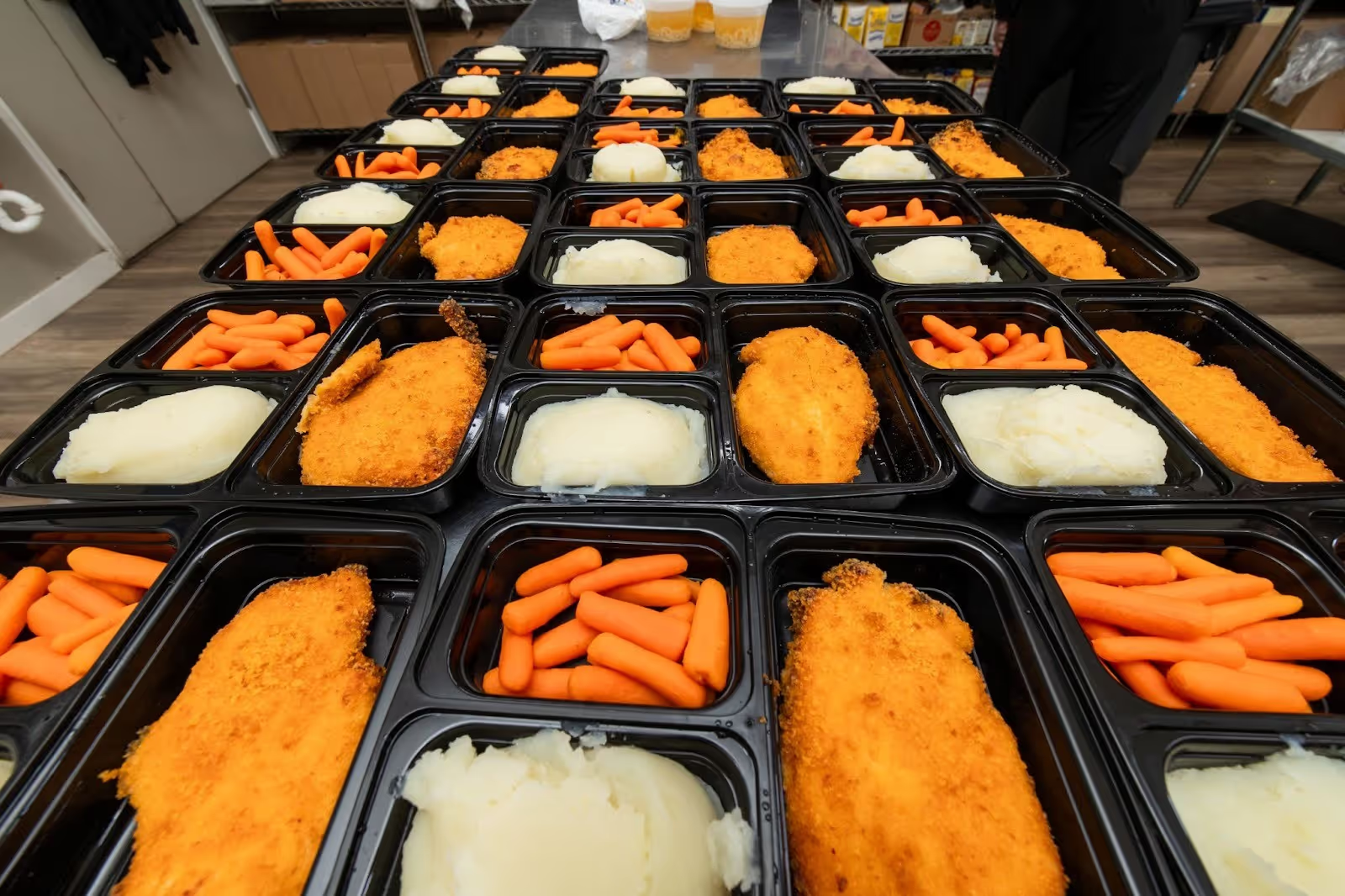
Each group of women has their designated jobs that they do on a weekly basis, they have the veg group, the knishe sgroup the cereal group and so on... Some groups have been coming for 15 years or more and operate with the efficiency of a professional kitchen. Others are newer, guided by experienced volunteers who help them understand kosher standards, portion sizing, and hospital delivery logistics. The work includes chopping vegetables, cooking proteins, assembling trays, labeling containers with milchig or fleishig designations, and packing everything for same-day or next-day delivery.
There is no fanfare. The women work side by side, often in companionable silence or quiet conversation. They know the meals they are preparing may be the only hot kosher food a patient receives that day. They know a mother staying with her sick child may not have eaten since yesterday. That knowledge shapes every action, every carefully sealed container, every neatly packed bag, every label checked twice.
Who These Volunteers Are
Our warehouse volunteer groups come from across the community. Some are organized through shuls, some through schools, and some are informal circles of friends or neighbors who decided, years ago, to dedicate one morning a week to chesed. Many are mothers themselves, carving out time between carpooling and work. Others are retirees, women whose children are grown and who now channel decades of cooking experience into feeding strangers in need.
What they share is a commitment to consistency. Chesed 24/7 depends on these selfless volunteers who show up continuously, week after week. We coordinate over 40 rotating groups, each responsible for a specific day or meal type. This rotation ensures that no single group is overburdened and that our warehouse keeps up with the necessary food production.
Some volunteers have told us they treasure this work because it is concrete. In a world where so much feels abstract or overwhelming, preparing a tray of food for a cancer patient or a surgical recovery family is tangible. It is chesed you can hold in your hands.
The Coordination Behind the Scenes
Volunteers do not work alone. Our office is staffed by coordinators who manage scheduling, procurement, compliance, and delivery. These coordinators ensure that every ingredient meets kashrus standards, that refrigeration is maintained, that health and safety protocols are followed, and that meals reach hospitals on time.
Coordinators also train new volunteers, troubleshoot kitchen issues, and handle last-minute requests, like a family arriving unexpectedly at a hospital on erev Shabbos who needs a full Shabbos in a Box by Thursday evening. The system works because professionals and volunteers work in partnership, each contributing what they do best.
Delivery drivers, many of whom are also volunteers, complete the chain. They load packaged meals into their vehicles and transport them to hospitals across New York and New Jersey. They deliver to Chesed Rooms, hand meals directly to families in waiting areas, or drop packages at nurses' stations when patients cannot come to the door.
What Volunteers Prepare
The menu varies, but staples include chicken, fish, pasta, rice, roasted vegetables, soups, and salads. Meals are designed to be nutritious, easy to reheat, and appropriate for a range of dietary needs. Volunteers label everything clearly, not just milchig and fleishig, but also noting common allergens or whether a dish is suitable for Shabbos warming.
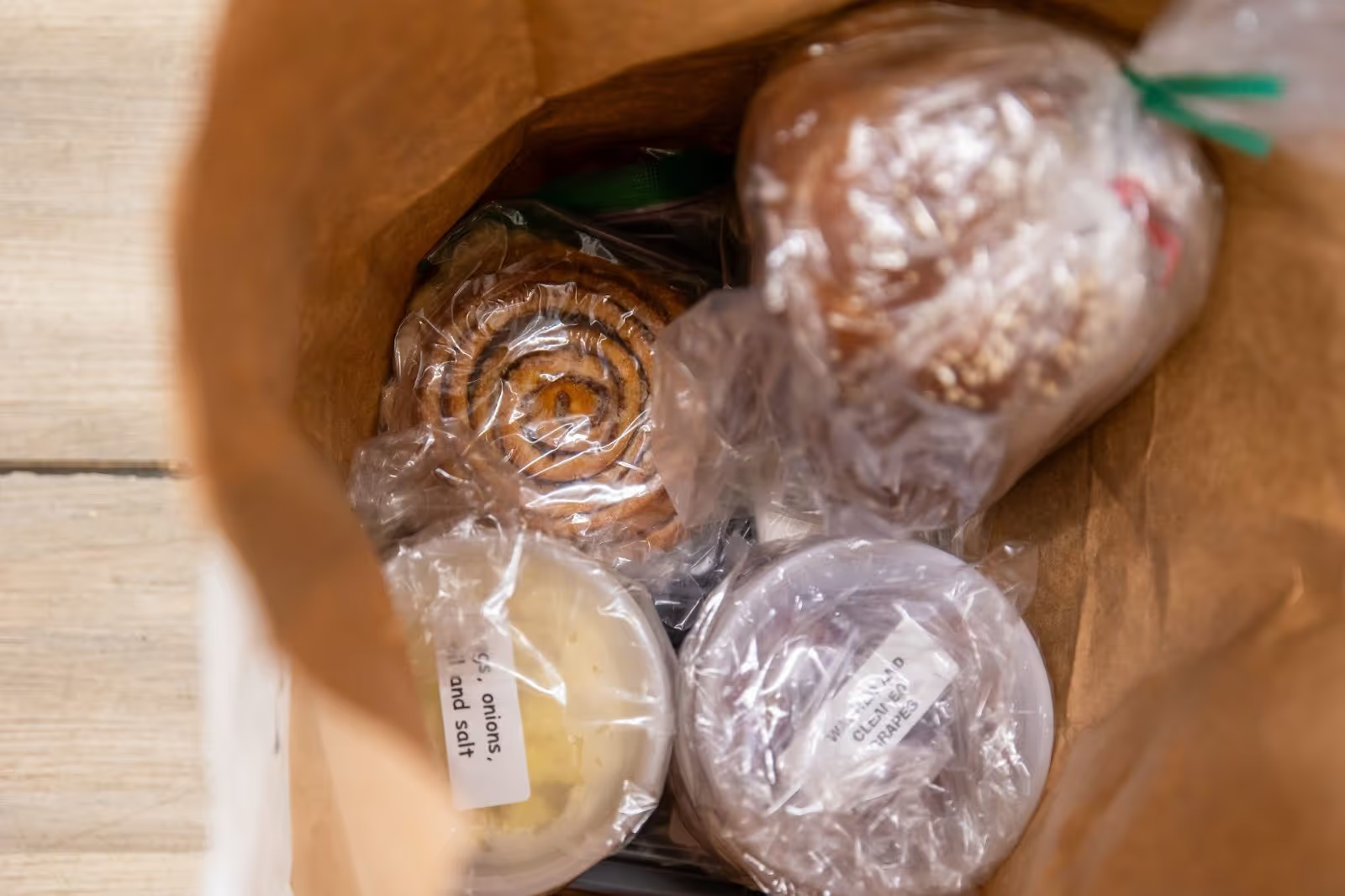
Shabbos preparation is its own operation. On Thursdays, the warehouse becomes a hive of activity as volunteers prepare complete Shabbos packages: challah, grape juice, candles, gefilte fish, chicken, kugel, and side dishes. These packages are packed into sturdy boxes and delivered by Thursday evening so families can receive them before Shabbos begins. During the weeks leading up to Pesach or Succos, the warehouse shifts entirely to holiday-specific preparation, ensuring that patients observing Yom Tov in hospitals have everything they need to maintain their spiritual routines.
Volunteers also prepare "grab-and-go" options, sandwiches, fruit, snacks, and bottled drinks, that stock our Chesed Rooms and apartments. These items are critical for families arriving late at night or those who need something quick between medical appointments.
The Ripple Effect of One Meal
It would be easy to think of this work as simply "making food." But the impact of a single meal prepared with care extends far beyond nutrition. When a woman in the hospital for chemotherapy opens a container of warm soup and realizes it is heimishe, made fresh that morning by someone who cared, it changes her day. When a father who has been sitting in a hospital hallway for dozens of hours receives a tray with chicken, rice, and a cooked vegetable dish, all kosher, all labeled, all ready to eat, it is a lifesaver. It is the feeling that Klal Yisroel is caring for him.
One mother recently shared with us that during her daughter's two-month hospital stay, the meals from Chesed 24/7 became a ritual of normalcy. "Every evening, we would sit together with the food your volunteers made, and for twenty minutes, it felt like we were home," she said. "We didn't have to think or plan or worry. We just ate together."
That is the ripple effect. A group of women in a New Square warehouse, working for three hours on a Tuesday morning, created 20 minutes of peace for a family in crisis 40 miles away.
How This Work Fits Into Chesed's Larger Mission
The warehouse is not an isolated operation. It is one piece of a larger ecosystem designed to support patients and families through every dimension of a medical crisis. The meals volunteers prepare stock our Chesed Rooms, fill the kitchens in our Chesed Apartments, and go directly to hospital bedsides. They complement the work of our transportation teams, our medical equipment lending library, and our medicine chests located in 44+ communities.
When a family uses multiple Chesed 24/7 services, staying in one of our Manhattan apartments, receiving Shabbos in a Box, and eating meals prepared by warehouse volunteers, the integration becomes clear. Each service supports the others. The apartment gives them a place to rest. The Shabbos package gives them spiritual continuity. The daily meals give them sustenance. Together, these services allow families to focus on what matters most: being present for their loved one.
Our warehouse volunteers make that integration possible. Without them, the apartments would be empty of food. The Chesed Rooms would run dry. The late-night phone calls from families asking, "Is there anything to eat?" would have no answer.
Why Donor Support Matters
Every ingredient that enters our warehouse, every container that holds a meal, and every delivery that reaches a hospital is made possible through donor support. Volunteers contribute their time, skill, and heart. Donors contribute the resources that allow that work to happen.
A week's worth of food preparation costs approximately $2,400. That includes proteins, vegetables, grains, dairy, packaging, labels, and delivery supplies. A single Shabbos in a Box, enough to sustain a family of four through an entire Shabbos, costs about $75 to assemble and deliver. These costs are covered entirely by community donations. No family is ever charged.
Those who wish to support this work can learn more about sponsorship options and direct giving through our website. Donations sustain not only the meals themselves but also the infrastructure that makes consistent, reliable service possible: refrigeration, transportation, coordination staff, and the warehouse space itself.
How You Can Be Part of This
If you are moved by the work of our warehouse volunteers and want to contribute in a similar way, we welcome you. Volunteering with Chesed 24/7 is open to individuals, families, and organized groups. Some people join an existing food prep rotation, while others form new groups with friends or through their shul.
We also need help with food drives, packing supplies, sorting donations, and assisting with holiday preparation. Schools often organize chesed days where students and parents work together in the warehouse, learning the value of quiet, consistent service.
For those who cannot volunteer physically, there are other ways to contribute: sponsoring a week of meals, hosting a community fundraiser, or simply spreading the word about Chesed 24/7's services so families in need know where to turn.
Every patient. Every need. Every day. That is the commitment we make, and it is a commitment we can only keep with the support of volunteers, donors, and the broader community.
FAQ: Inside the Chesed 24/7 Warehouse
What happens inside the Chesed 24/7 warehouse?
The warehouse is where volunteer groups prepare fresh kosher meals for hospitalized patients and their families. Volunteers chop, cook, package, and label hundreds of meals each week, following strict kosher standards and hospital delivery schedules.
Who are the warehouse volunteers?
Most are women from the local community, mothers, retirees, and friends, who dedicate a few hours each week to food preparation. Over 1,400 volunteers rotate through, ensuring daily coverage.
What kind of meals do volunteers prepare?
Volunteers make balanced, nutritious meals including chicken, fish, vegetables, soups, pasta, and sides. They also prepare Shabbos packages, Yom Tov meals, and grab-and-go snacks for Chesed Rooms and apartments.
Can I volunteer at the warehouse?
Yes. Individuals and groups are welcome to participate in food prep, packing, or special projects. Contact Chesed 24/7 to learn about current openings and scheduling.
How are the meals delivered?
Meals are packed into insulated carriers and delivered by volunteer drivers to hospitals, Chesed Rooms, and families' hands, often within hours of preparation.
Are these services free for families?
Yes. All meals and services are provided at no cost, made possible entirely through donor support and volunteer labor.
The women who work in our warehouse do not seek headlines or recognition. They seek only to serve, with consistency, humility, and profound care. They are the quiet heroes behind every meal, every Shabbos package, every moment of relief that a family experiences during crisis. Their work is chesed in its purest form: steady, modest, and life-sustaining.
[[cta]]






.svg)