What It Takes to Continuously Stock 34 Hospital Chesed Rooms Every Day

Every single day, something remarkable happens behind the scenes at dozens of hospital chesed rooms across New York and New Jersey. Refrigerators are restocked with snacks, beverages, and Kosher essentials. Warm nourishing meals are carefully arranged and delivered. Preparations for Shabbos meals and housing are underway.
Our 34 hospitality rooms are continuously restocked and ready to serve, but through a daily operation so coordinated it runs like clockwork. At Chesed 24/7, we don't just set up cholim visiting rooms and walk away; we make sure that when a tired family walks in at 2 a.m. or a patient's spouse needs a quiet meal on Shabbos, everything they need is waiting for them, warm, stocked, and dignified.
Key Takeaways
- Chesed 24/7 operates 34 hospital chesed rooms across New York and New Jersey, providing kosher meals, Shabbos essentials, and comfort items to families in crisis completely free of charge.
- Daily logistics include food deliveries, consumption tracking, and coordination of hundreds of volunteers to keep all of Chesed 24/7 programs running.
- Each hospital hospitality room is equipped with fresh meals, beverages, Shabbos supplies like challah and candles, spiritual resources, and comfort items to meet families' physical and emotional needs.
- The entire chesed room operation runs on donor support, with transparent funding covering food, transportation, kitchen operations, and staff coordination to serve families during medical emergencies.
What It Takes to Stock 34 Hospital Chesed Rooms Daily
The scale of this work is easy to underestimate. Thirty-four hospital hospitality rooms don't stock themselves. Each one operates 24/7, including Shabbos and Yom Tov. Each one serves dozens, sometimes hundreds, of people daily, during high-need seasons. And each one must reflect the same standard: kosher food, clean space, dignity, and reliability.
Here's what that actually looks like in practice.
The Daily Logistics
Each day, our warehouse comes alive with a carefully orchestrated restocking operation. Dozens of volunteers step into coordinated roles — peeling, chopping, cooking, baking, and packaging — transforming a commercial kitchen into the heartbeat of a lifeline. What might look like simple food preparation is, in reality, a seamless collaboration powered by purpose, compassion, and precision.
From our kitchens, deliveries depart fully stocked with fresh meals, baked goods, produce, and pantry staples. Routes are strategically mapped to serve hospitals throughout Manhattan, Monsey, Hackensack, and surrounding communities. Every hospital chesed room operates differently. High-traffic locations such as Memorial Sloan Kettering or Hospital for Special Surgery require larger quantities and frequent replenishment. Smaller chesed rooms may need lighter shipments, but they receive the same meticulous attention.
Our team reviews usage data weekly, carefully adjusting inventory levels to prevent waste while ensuring shelves are never empty. It’s a balance of foresight and flexibility, guided by real-time needs.
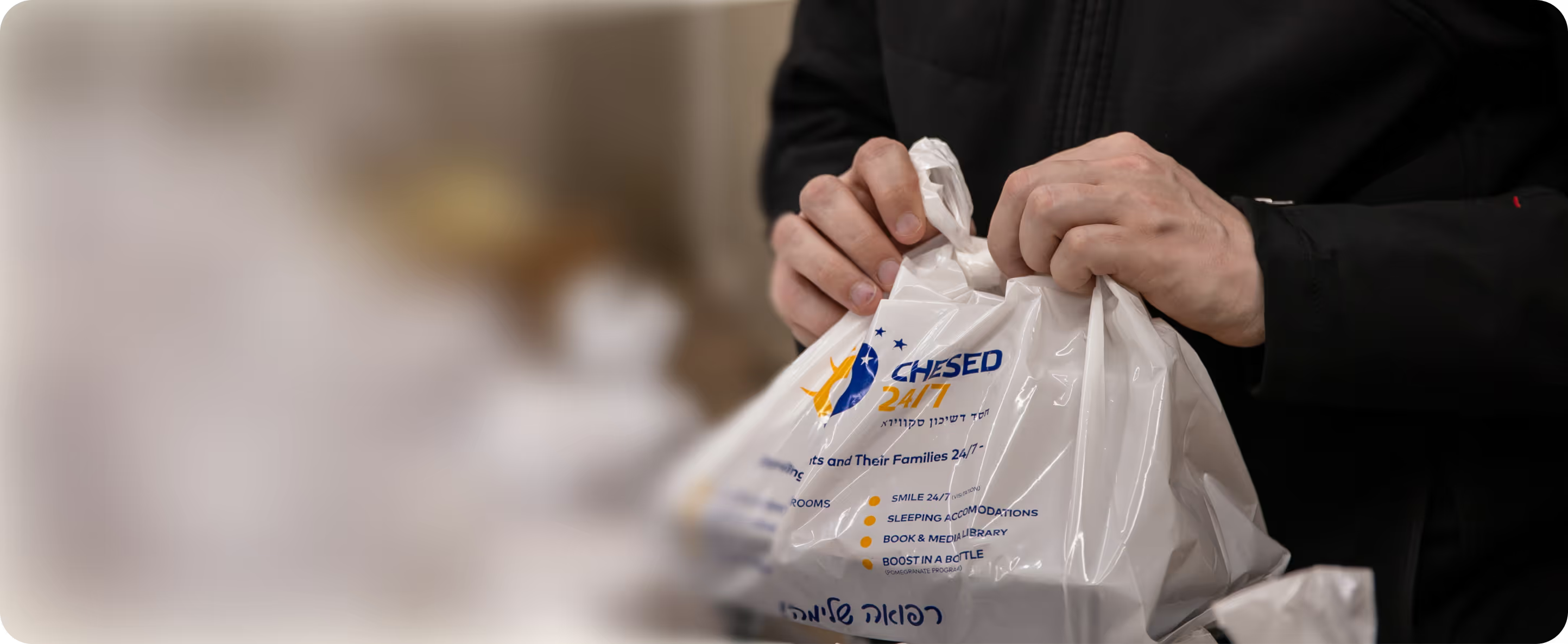
Volunteers are at the center of it all. Working in shifts, food preparation teams assemble sandwiches, knishes, baked ziti, and fresh salads with efficiency and care. Every item is packaged in our kitchens, clearly labeled to meet allergen safety requirements and uphold kosher standards, then distributed according to a precise daily schedule.
What Goes Into Every Room
Every chesed room is designed with intention. It’s not simply stocked — it’s thoughtfully prepared to meet the emotional, physical, and spiritual needs of families navigating some of life’s most difficult moments.
Each room receives:
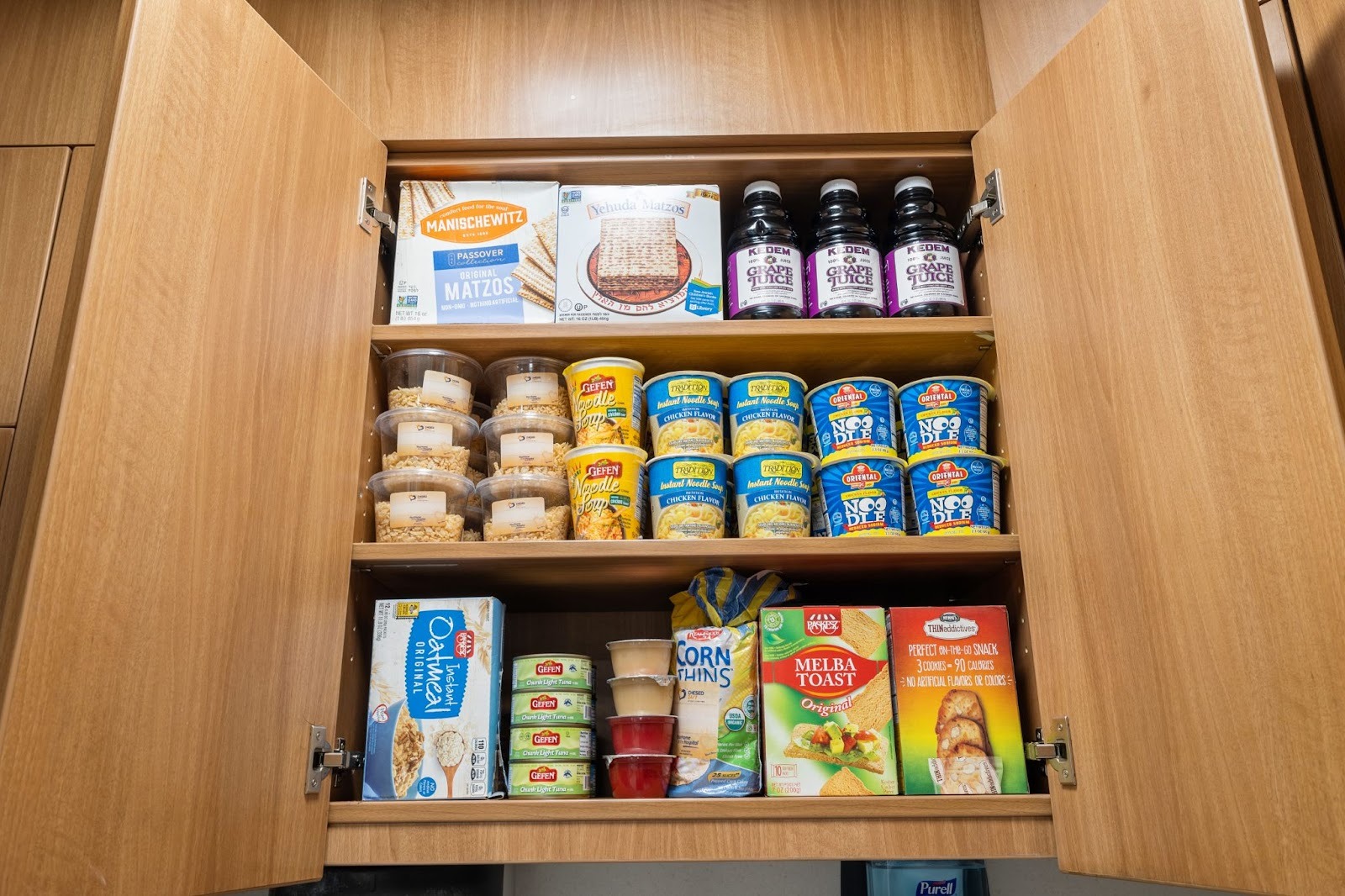
- Fresh and packaged meals: Individually packaged grab-and-go meals, complemented by freshly cut melon and vegetables, prepared salads, and ready-to-eat selections for families who need nourishment at any hour.
- Beverages: Coffee, tea, juice, bottled water, and fully stocked coffee stations to provide a steady source of warmth and comfort.
- Snacks and staples: Crackers, whole and cut fruit, granola bars, pretzels, nuts, and other easy, accessible options for quick sustenance.
- Paper goods and serving supplies: Disposable plates, cups, cutlery, napkins, and more.
- Shabbos and Yom Tov essentials: Grape juice, challah and matzah, besamim for Havdalah, and additional essentials to help families observe with dignity. Extra Shabbos in a Box kits and prepared food for Shabbos seudos are kept stocked in each chesed room to accommodate last-minute and unexpected needs
- Basic kitchen appliances: Microwaves, refrigerators, coffee machines for eating needs.
- Spiritual resources: Tehillim, siddurim, and Jewish reading material.
- Comfortable seating: Where space allows, tables and chairs are set up for proper seating, creating a space that feels welcoming.
The goal is simple: when someone walks into a Hackensack Medical Center chesed room or a Valley Hospital location, they should feel that someone thought of them. Not vaguely, but specifically. With warm food, accessible seating, and the ability to eat and refresh without calling anyone for help.
The Weekly Shabbos Cycle
Every Thursday, the operation shifts gears. Shabbos stocking begins.
By Friday morning, every chesed room receives upgraded provisions, including fresh challah from local bakeries and prepared Shabbos meals. Rooms in hospitals with larger Jewish patient populations receive larger quantities of Shabbos meals to accommodate the number of families staying over the weekend.
On Sunday, another delivery cycle begins to restock what was used and prepare rooms for the week ahead. This rhythm repeats, week after week, without exception.
Handling the Unexpected
Medical crises don't follow schedules. Neither do we.
When a large family arrives, or a patient will be there over Yom Tov, or a chesed room runs out of meals faster than expected, our logistics team responds in real time. Extra deliveries are dispatched. Volunteers are mobilized. Donor-sponsored emergency funds cover last-minute provisions.
During the Yomim Tovim, stocking becomes even more complex. Pesach requires an entirely separate supply chain: kashering, kosher-for-Passover food, disposable kitchenware, matzah, and pre-portioned Seder essentials. Sukkos means delivering items to outdoor sukkahs or ensuring hospital rooms have what's needed for families observing the chag away from home. Chanukah brings menorahs, candles, and latkes.
Each holiday demands advance planning, yet the baseline daily operation never pauses. Rooms must stay stocked even as special provisions are layered on top.
Behind the Scenes: The People and Systems That Make It Work
This operation runs because of infrastructure most people never see.
Our warehouse facilities store bulk supplies, cases of canned goods, pallets of paper goods, frozen meals ready to be deployed. Inventory management software tracks consumption rates across all locations. Procurement teams negotiate with kosher food suppliers, bakeries, and distributors to secure consistent quality at sustainable costs.
Drivers follow precise routes optimized for fuel efficiency and hospital access schedules. Our team knows every building's logistics inside out.
Professional kitchen staff work in certified commercial kitchens that meet both health requirements and kashrus standards. Meals are prepared under rabbinical supervision, with full traceability for ingredients and equipment.
Volunteers supplement this professional backbone. Women's groups gather weekly to prepare baked goods, assemble care packages, or sort donated supplies. Schools participate in chesed projects, packing snacks or preparing supplies for specific rooms. These contributions are meaningful and valued, but they do not replace the full-time coordination required to operate at this scale.
The Donor Partnership That Sustains It All
Every meal delivered, every room restocked, every Shabbos provision prepared, it all runs on donor support.
Chesed 24/7 does not charge patients or families. Ever. Services are provided at no cost because community members and sponsors choose to invest in this work. Some donors sponsor entire rooms at specific hospitals. Others contribute to the general food fund, which covers daily stocking across all locations. Still others sponsor holiday provisions or emergency response capacity.
The cost to maintain this operation is significant. Food alone, fresh, kosher, and delivered daily to 34 locations, requires a substantial budget. Add transportation, kitchen operations, equipment maintenance, cleaning services, and staff coordination, and the financial infrastructure becomes clear. Transparency matters. Donors need to know their contributions directly sustain the ability of a family in crisis to walk into a hospital room and find a warm meal waiting.
Those who wish to support this work can learn more about sponsorship options through Chesed 24/7's donor partnerships. Every contribution, whether it sponsors a single Shabbos package or a month of daily stocking, makes a measurable difference in how many families we can serve and how well we can serve them.
Why the Details Matter
When someone is sitting in a hospital at midnight, exhausted and afraid, the stocked chesed room isn't just convenient. It's a message.
It says: You are not forgotten. Someone planned for this. Someone made sure you'd have what you need.
That message is only credible if the room is actually stocked. If the food is fresh. If the coffee is hot. If the Tehillim is there. If the cleaning crew came through and left the space dignified.
The operations behind 34 hospital hospitality rooms aren't glamorous. They're repetitive, logistically demanding, and invisible when done right. But they are essential. Because chesed isn't just intention. It's execution. It's showing up every single day, even when no one is watching, and making sure the next family who walks in finds exactly what they need.
That's what it takes. And that's what we do.
Frequently Asked Questions
What is a chesed room in a hospital?
A chesed room is a dedicated hospitality space inside or near a hospital that provides kosher food, beverages, seating, spiritual resources like Tehillim, and Shabbos supplies. These rooms operate 24/7 as a home away from home for patients and families during medical crises.
How many hospital chesed rooms does Chesed 24/7 operate?
Chesed 24/7 maintains 34 hospital hospitality rooms across New York and New Jersey. Each location is stocked daily with fresh kosher meals, snacks, beverages, and Shabbos essentials to serve families around the clock, including weekends and holidays.
How are chesed rooms stocked every day?
Daily restocking begins before dawn with coordinated deliveries from commercial kitchens. Trucks bring fresh meals, baked goods, and supplies to each location following mapped routes. Teams of volunteers assist with food preparation, while full-time staff ensure continuous operations and logistics coordination.
Are chesed rooms available on Shabbos and Jewish holidays?
Yes, chesed rooms operate 24/7, including Shabbos and Yom Tov. Each Thursday evening, rooms receive upgraded provisions like fresh challah, prepared Shabbos meals, grape juice, candles, and warming trays to support families observing Shabbos in hospital settings.
Who pays for hospital chesed room services?
All chesed room services are provided to families at no cost. Operations are sustained entirely through donor support and community contributions, which cover food, transportation, kitchen operations, equipment maintenance, and daily stocking across all hospital locations.
Can I volunteer to help prepare food for chesed rooms?
initiatives. Volunteer groups regularly come to the warehouse to assist with food preparation — helping cook, assemble, and package items that are distributed to chesed rooms and families in need. To learn more about current volunteer opportunities and how you can get involved, please contact Chesed 24/7 directly.
Yes, Chesed 24/7 engages over 2,000 active volunteers who work to support Chesed 24/7's many programs and initiatives. Groups of volunteers come to the warehouse to help with food preparation. Contact Chesed 24/7 directly to learn about current volunteer opportunities.
[[cta]]





.svg)