Creating a Shabbos-Friendly Space near our Hospitals
A hospitalized patient needs surgery on Friday. Her family lives hours away. Shabbos is approaching, and the question surfaces quietly but urgently: Where can we stay? Where will we light candles? How do we keep Shabbos near a hospital?
This is not a theoretical question. It happens every week. And for families facing medical emergencies, the logistics of Shabbos observance, while caring for a loved one, can feel overwhelming. That's where Chesed 24/7's apartments step in, providing not just a place to sleep, but a fully equipped, Shabbos-friendly home near hospitals where dignity, rest, and normalcy remain intact even during crisis.
Creating a Shabbos-Friendly Space near our Hospitals
When a family member is hospitalized, the world narrows. Suddenly, home is a hospital corridor. Meals are grabbed between rounds of doctors. Sleep happens in waiting-room chairs. And when Shabbos arrives, the questions multiply: Can we light candles here? Is there an eruv? Where will we eat? How do we rest?
For observant Jewish families, the week comes to an end with Shabbos. Yet hospitals, by design, run 24/7 on schedules that don't pause for sundown. The beeping machines, fluorescent lights, and constant motion create an environment that feels anything but restful. Families need a refuge. A space where they can honor Shabbos, recharge emotionally, and remain close enough to respond if needed.
That's why we maintain fully furnished, Shabbos-friendly apartments near major hospitals in Manhattan and surrounding areas. They're fully-furnished home settings, stocked, prepared, and designed with the needs of frum families in mind. From the kitchen appliances to the lighting to the proximity to medical centers, every detail reflects an understanding of what it means to observe Shabbos during a medical crisis.
What Makes an Apartment "Shabbos-Friendly"?
A Shabbos-friendly hospital apartment isn't just about location. It's about thoughtful infrastructure that allows families to observe halacha without added stress. Our apartments include:
- Pre-programmed lighting and climate control so families don't need to manipulate electronics on Shabbos
- Fully-stocked kitchens with all food required for Shabbos seudos, along with disposable items for easy setup
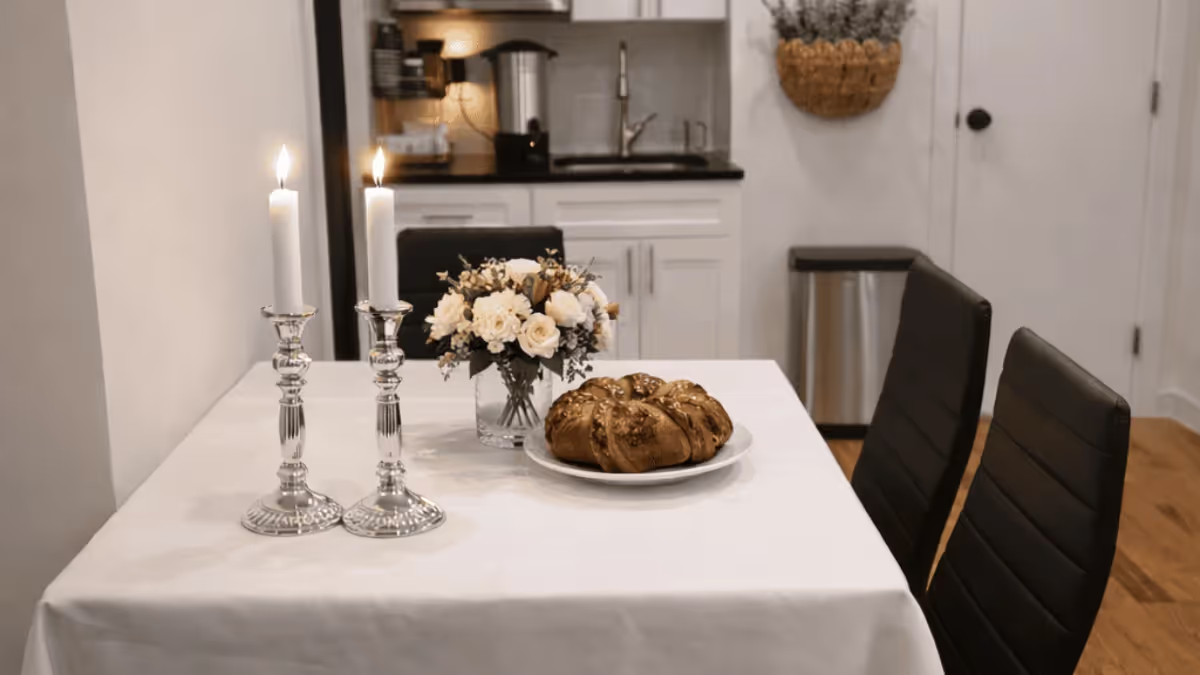
- Space designated for candle-lighting, safe, appropriate, and available each week
- Shabbos-friendly appliances, including hot water urns and warming trays that remain on throughout Shabbos
- Seforim, siddurim, and Judaica items needed for tefillah, learning, and everything required to properly observe Shabbos away from home
- Separate sleeping areas to accommodate men and women
- Quiet, residential neighborhoods within walking distance of hospitals, so families can reach the patient quickly if necessary
These features reflect years of input from Chesed 24/7's staff who understand that when someone is navigating surgery, treatment, or recovery far from home, the ability to keep Shabbos with dignity becomes a form of emotional and spiritual grounding.
Where Families Light Shabbos Candles Near Hospitals
One of the most common questions we receive: "Where can I light candles near the hospital?"
In our apartments, every unit includes a designated area, typically the kitchen or dining space, where candle-lighting is safe, permitted, and set up in advance. We provide candles, matches, and a stable surface. Families are encouraged to call ahead (preferably by Thursday evening) so that we can confirm the apartment is fully prepped and restocked.
Some hospitals have policies restricting open flames. In those cases, LED Shabbos candles are available. While halachic guidance varies, many families consult with their rav before travel and plan accordingly. Our staff is familiar with these sensitivities and can guide families toward the setup that aligns with their minhag and medical circumstances.
Plus to candle-lighting, the apartment becomes the center of Shabbos observance: Kiddush Friday night, seudos, zemiros, rest. It transforms what could be a cold, fragmented experience into something closer to home.
Who Uses These Apartments?
Our Shabbos-friendly apartments serve a wide range of families:
- Spouses of patients undergoing extended treatment or recovery who need to remain nearby for weeks or months
- Parents of hospitalized children, especially during surgeries, NICU stays, or complex medical protocols
- Out-of-town families traveling from Monsey, Lakewood, Baltimore, or beyond for specialized care in Manhattan
- Elderly family members or siblings who cannot manage long commutes but want to be present during critical moments
Because the apartments are open 24/7 and available throughout the year, not just on Shabbos, they provide flexibility for families navigating unpredictable schedules. A mother might stay Sunday through Thursday, go home briefly, and return. A father might coordinate with his wife so one of them is always near the hospital. The apartment becomes a base, a stable point in an otherwise chaotic time.
How Families Access and Use the Space
Booking is straightforward, with advance coordination preferred. Families call 845-354-3233, ideally several days before their anticipated stay. Our team asks a few questions: Which hospital? How many people? How long? Shabbos or weekday?
Once confirmed, families receive the apartment address, entry instructions, and a rundown of what's stocked. Inside, families find:
- Beds made with fresh linens
- Towels, toiletries, and basic household supplies
- A stocked pantry with shelf-stable kosher staples
- A refrigerator with dairy or pareve meals as well as food for Shabbos seudos
- Shabbos supplies: challah, grape juice, candles, and often a hot plate or crockpot ready to go
Daily housekeeping isn't intrusive but ensures that the apartment remains clean, organized, and restocked as needed.
There's no charge. Our services are made possible entirely through donor support. Families are never asked to pay or prove eligibility beyond their current medical situation.
The Logistics Behind the Setup
Creating a Shabbos-friendly space isn't a one-time task. It's an ongoing operation.
Each week, our staff and volunteers restock apartments, replace used candles, refresh pantries, and adjust setups based on family size and needs. Lighting timers are checked. Appliances are tested. Eruv boundaries are confirmed.
Before every Shabbos, a checklist runs:
- Candles, matches, and candle holders in place?
- Hot water urn filled and plugged in?
- Challah, grape juice, and basics available?
- Trash cleared, linens changed, surfaces cleaned?
- Entry instructions sent to the incoming family?
This level of operational detail is invisible to most families, but it's what allows someone arriving late Friday afternoon, exhausted and anxious, to walk into an apartment that simply works.
Many apartments are located within easy walking distance of hospitals like Mount Sinai, Weill Cornell, NYU Langone, and others in Manhattan. Some are in Hackensack, where the recent opening of our Hackensack apartment expanded access for families using that major medical hub. Each location is chosen based on proximity, safety, eruv access, and community infrastructure.
Shabbos Observance During Hospitalization: Why It Matters
For families navigating serious illness, Shabbos can feel like a contradiction. The hospital keeps running. Doctors make rounds. Monitors beep. IVs need changing. Yet Shabbos asks us to stop, to step back, to rest.
Having a Shabbos-friendly space near the hospital allows families to hold both realities. They can be present for their loved one, reachable within minutes if needed, while also stepping into the rhythm of Shabbos. A space that honors both the urgency of medical care and the basics of Jewish life.
Connecting to Chesed 24/7's Larger Infrastructure
The Shabbos-friendly apartments don't operate in isolation. They're part of a broader network of support designed to address the multiple, overlapping needs families face during hospitalization.
Families staying in the apartments often use:
- Chesed Rooms inside hospitals for meals, rest, and storage during the day
- Shuttle services to travel between Rockland County and Manhattan without needing to drive
- Shabbos in a Box, delivered directly to the apartment or hospital room for families unable to prepare their own meals
- Volunteer-prepared food groups that deliver fresh, homemade meals throughout the week
This integrated approach means that families don't have to cobble together solutions from multiple organizations. One phone call connects them to housing, food, transportation, and emotional support. It's coordinated, consistent, and designed to reduce, not add, stress.
For example, a family staying at our Manhattan apartment might also stop by the Lenox Hill or Valley Hospital Chesed Room during weekday visits, pick up supplies from a medicine chest, and receive Shabbos meals without needing to request each service separately.
How Donors Make This Possible
Every apartment, every stocked pantry, every set of Shabbos candles, every load of laundry, is funded by individual donors and community partners.
Some sponsor a specific apartment for a year. Others contribute toward the cost of weekly restocking. Still others dedicate a Shabbos setup in memory of a loved one. The model is simple: donors provide the resources, and we ensure those resources reach families in real time.
This is not a government-funded program. It doesn't run on grants or endowments. It runs on the quiet, steady commitment of people who understand that when a family is facing a medical crisis, a Shabbos-friendly space near the hospital can make the difference between despair and dignity.
Those who wish to support this work, or dedicate an apartment in honor or memory of someone, can learn more by contacting Chesed 24/7 directly.
What Families Should Know Before Calling
If you or someone you know needs a Shabbos-friendly apartment near a hospital, here's what to keep in mind:
- Call early. Apartments fill quickly, especially around Yom Tov or during busy medical seasons. Reach out as soon as you know you'll need accommodations.
- Be specific. Let us know: Which hospital? How many people? Any special needs (wheelchair access, infant supplies, dietary restrictions)?
- Plan for Shabbos. If you're arriving Friday, aim to check in before candle-lighting time. We'll provide everything you need, but coordination helps.
The number is 845-354-3233. It's answered 24/6. If you're not sure whether you qualify or whether space is available, call anyway. We'll work it out.
A Quiet Anchor in a Chaotic Time
Hospitalization is disorienting. Time blurs. Normalcy disappears. For observant families, the loss of Shabbos structure can deepen that disorientation. Having a space where candles can be lit, where a table can be set, where rest is possible, it doesn't erase the crisis, but it provides an anchor.
That's what we mean by Shabbos-friendly. Not just halachically compliant, but emotionally and spiritually supportive. A place where, even in the middle of fear and uncertainty, a family can pause, breathe, and remember: Hashem is with us. We are not alone. And we have what we need to get through this.
These apartments exist because the community decided that no family should have to choose between staying near their loved one and observing Shabbos. Both are possible. Both are necessary. And both are supported, week after week, family after family, through the quiet, steady infrastructure of Chesed 24/7.
[[cta]]






.svg)