Lessons in Chesed: How Students Learn Kindness by Doing
A classroom full of seventh-graders gathers around tables covered with plush stuffed animals, colorful craft supplies, and bright gift bags. One student gently ties a ribbon around a teddy bear’s neck. Another carefully places crayons and a small puzzle into a bag. A third slips in a handwritten card that reads, “Feel better soon — we’re thinking of you!” They’re assembling care packages of gifts for hospitalized children—young patients they’ve never met, but already care about deeply.
This is chesed in action. School chesed projects like this teach empathy in a way no lesson plan can. When students imagine what it feels like to be in a hospital bed and then choose gifts to brighten that space, they begin to understand kindness as responsibility. And when those care packages are distributed through organizations like Chesed 24/7, the students see how their small acts ripple outward—transforming an ordinary afternoon into smiles, comfort, and a reminder to a hospitalized child that they are not alone.
Key Takeaways
- School chesed projects teach students kindness through hands-on activities like assembling care packages, and sorting supplies for families in medical crisis.
- Experiential learning through chesed work builds empathy, responsibility, and a sense of connection to the broader Jewish community in ways lectures cannot.
- Partnering with organizations like Chesed 24/7 allows schools to turn peer efforts into real support for hospital patients and caregivers across multiple locations.
- Students gain perspective-taking skills and internalize Torah values by seeing the direct impact of their contributions on families facing hardship.
- Schools can easily start school chesed projects by coordinating packing events, meal prep days, or Bas Mitzvah programs tailored to any age group or schedule.
How Students Learn Kindness by Doing
School chesed projects are hands-on, structured volunteer activities that involve students visiting Chesed 24/7 premises to participate in a fun group chesed activity.
Typical school activities arranged through Chesed 24/7 include:
- Sorting games or assembling gift packages for hospitalized children
- Preparing Shabbos and Yom Tov essentials for families away from home
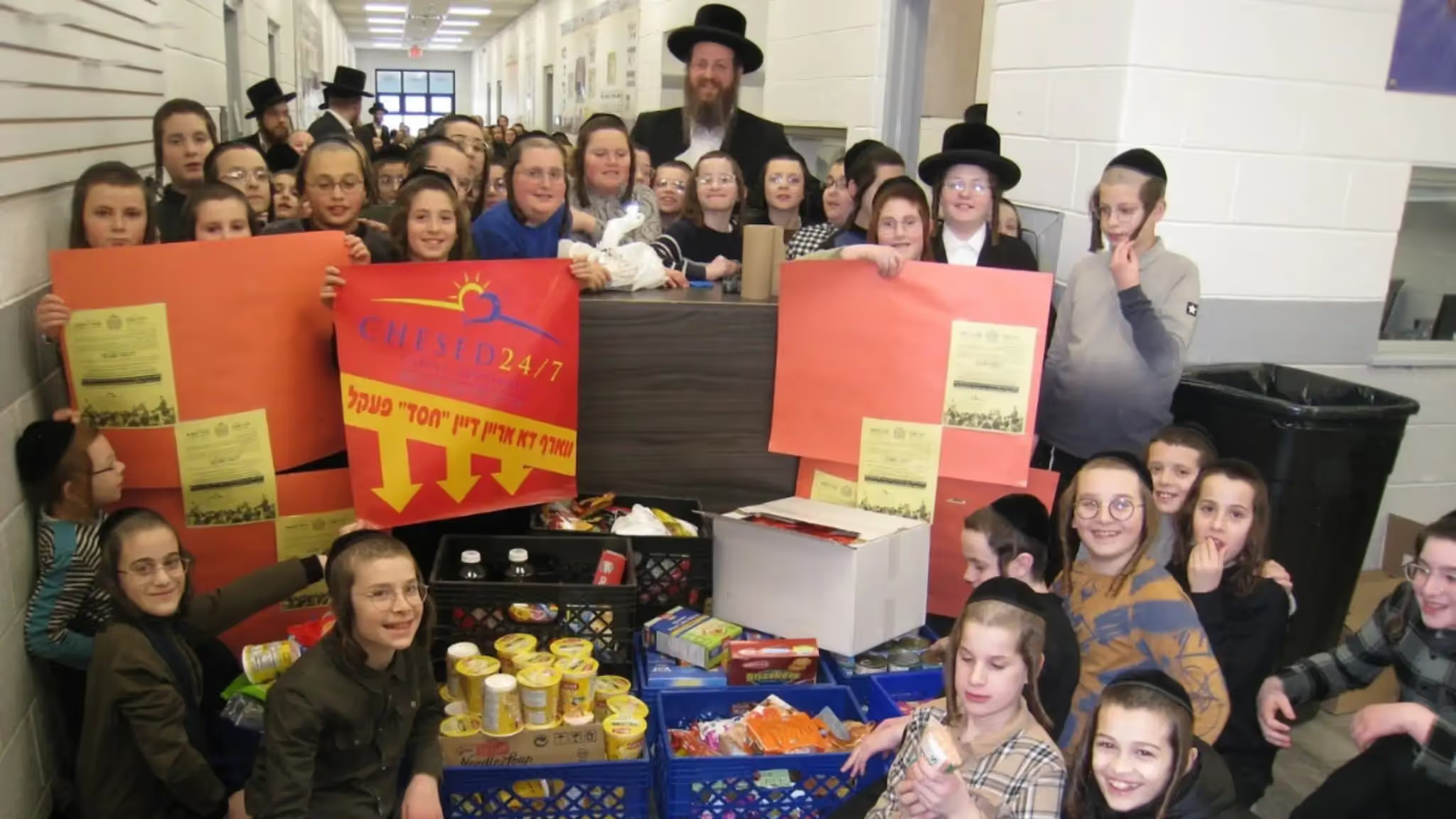
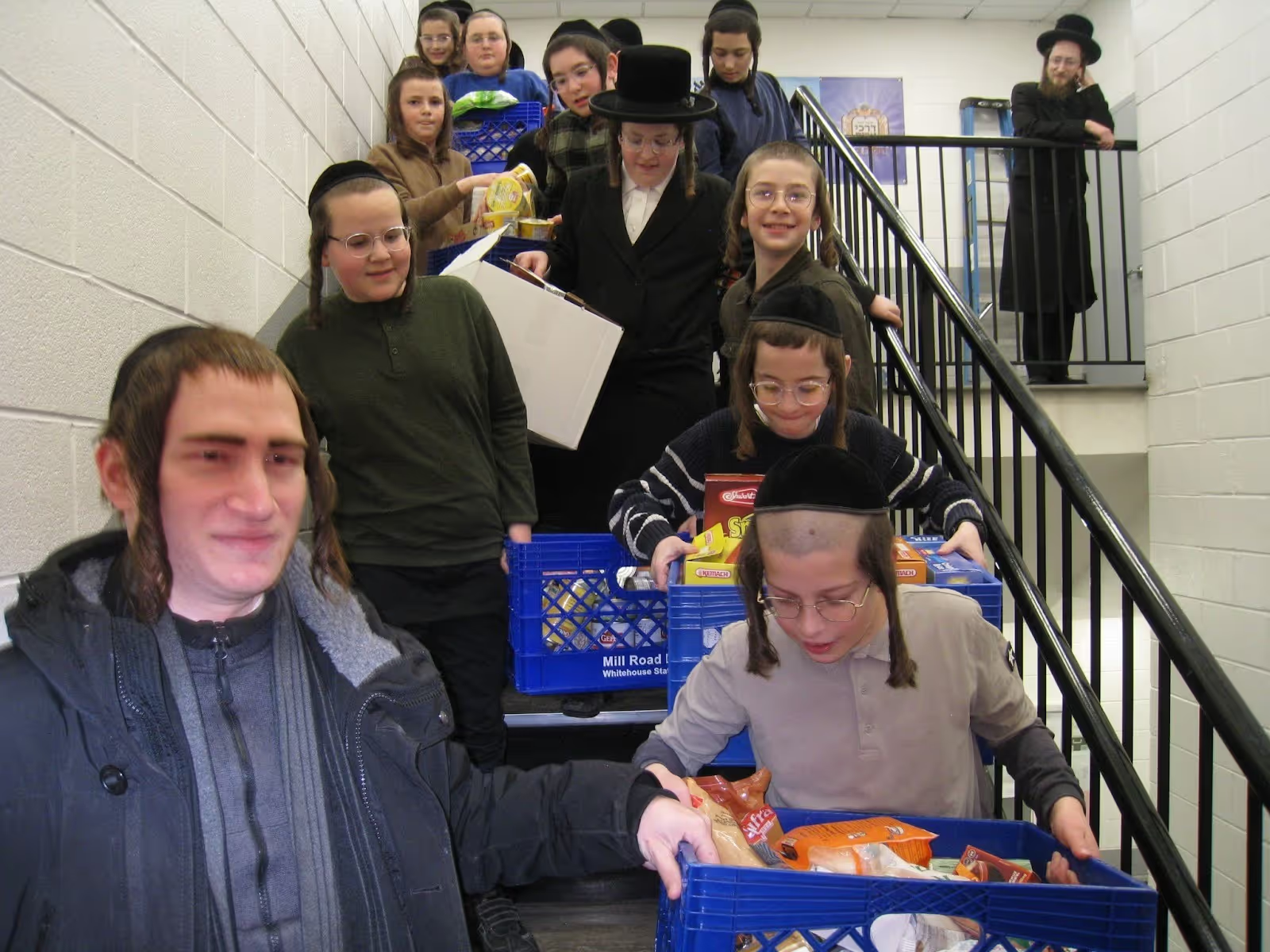
- Collecting non-perishable food for community pantries
- Writing cards or assembling encouragement bundles for people in recovery
- Participating in organized campaigns that feed families facing medical crises
These projects are more than extracurricular activities—they are living lessons in Ahavas Yisroel. Students grow up understanding that when another Yid is facing difficulty, we respond.
And beyond the impact on those receiving help, students experience something powerful themselves: the deep, satisfying feeling that comes from helping another person. They see that their effort matters. They feel the pride of contributing. That sense of purpose—of being needed and making a difference—becomes part of who they are, shaping the kind of adults they will one day become.
Why Doing Matters More Than Talking About It
When a student fills a gift bag with a soft stuffed animal, a small game, and a handwritten “Feel better soon” card for a hospitalized child, something shifts. The child assembling the package pauses and wonders: What would I want if I were in that hospital bed? That question is the beginning of empathy.
Educational research supports what teachers already know: experiential learning creates stronger moral understanding than instruction alone. Students who participate in service projects demonstrate increased perspective-taking, stronger community ties, and a greater sense of agency. They stop thinking, Someone should help, and start thinking, I can help.
How Chesed Projects Connect to Hospital Support
Many school chesed initiatives partner directly with established organizations that serve families during medical emergencies. Chesed 24/7 is one of those organizations. We coordinate with schools to channel student energy into work that directly supports patients and caregivers.
Here's how it typically works:
- A school reaches out. Teachers, principals, or student leaders contact us to organize a chesed activity tailored to their grade level and schedule. (Schools pay a fee for participating in this opportunity.)
- We share what’s needed. Based on current demand and the time of year, we may suggest packing Shabbos boxes, assembling care packages for hospitalized children, preparing hospitality room supplies, or organizing essentials for our apartments near hospitals.
- Students come on-site and get a behind-the-scenes glimpse. Students visit Chesed 24/7’s facilities and see firsthand how chesed operates day to day—how meals are prepared, how supplies are organized, and how volunteer activities are coordinated. That exposure transforms the project from a school activity into a window into real community infrastructure.
- Students prepare and assemble. With guidance from our team, they learn how to package items properly, label them where necessary, and understand who will be receiving them.
- Items are distributed to patients in need. The completed packages are delivered to hospitalized individuals in Manhattan, Monsey, Hackensack, and Ellenville—often within days. Students know exactly where their efforts are going and who will benefit.
In this way, students are becoming part of a living system of chesed that supports families during some of their most difficult moments.
Schools also participate in larger volunteer-driven food initiatives during the summer and around Yom Tov, when demand for meals and pantry staples spikes. These campaigns bring together dozens of schools and hundreds of students, all contributing to a shared goal.
What Students Gain From Chesed Work
The benefits of student volunteer programs aren't just for the recipients, they're transformative for the kids themselves.
They develop empathy. Packing a meal for someone you'll never meet teaches students to care about people outside their immediate circle. It expands their world.
They build competence. Chesed projects involve real tasks: measuring, organizing, following instructions, working as a team. Students practice responsibility and see that their contributions have weight.
They feel connected to Klal Yisroel. When a child helps a family in crisis, they become part of something larger than themselves. They see how Yidden hold each other up.
They internalize Torah values. Chesed isn't just a word on a poster. It's the feeling of taping up a box, knowing it will bring comfort to someone who's hurting.
One teacher who organized a school-wide Shabbos package assembly told us, "The kids were so proud. They kept asking, 'When will the families get these? Will they know we made them?' They wanted to be part of the story."
That's the point. Chesed projects teach children that they are part of the story.
Bas Mitzvah Chesed: A Special Opportunity
For girls approaching their Bas Mitzvah, chesed takes on added meaning. Many families choose to mark this milestone not with a party alone, but with a meaningful project that reflects the new responsibilities of Jewish adulthood.
Chesed 24/7 offers a Bas Mitzvah program that invites girls to prepare care packages, often including teddy bears, games, or comfort items, for hospitalized children. The work is done in coordination with family and friends, and the finished packages are distributed through our network of hospital services.
This serves as a way to anchor a simcha in service. Girls often say the chesed component was the part of their Bas Mitzvah they remembered most.
How Schools Can Start
Schools interested in organizing a chesed project with Chesed 24/7 can begin by reaching out by calling (845) 354-3233. We work with schools of all sizes, from small classes to grade-wide initiatives.
Some schools make chesed projects a recurring part of their calendar year, packing meals before Pesach, assembling care packages in the winter, organizing Shabbos supplies before Yom Tov. Others start with a single event and build from there.
What matters most is that the work is real, the need is real, and the students understand the connection between what they're doing and who it helps.
The Quiet Impact of School Chesed Activities
There's no dramatic reveal when a box of food reaches a family. No applause. No ceremony. A mother opens the pantry in a Chesed Apartment and finds soup. A father picks up a Shabbos package and realizes someone thought of him. A child in a hospital room hugs a teddy bear and feels a little less alone.
The students who packed those items will never know the exact moment their work mattered. But it did.
Chesed projects teach children that kindness doesn't always come with recognition. Sometimes it's quiet. Sometimes it's invisible. And sometimes, that's exactly what makes it holy.
When schools build opportunities for students to give, not theoretically, but practically, they're shaping the next generation of people who show up, pack the boxes, and ask what else is needed. That's a lesson no textbook can teach.
How Donors Make Student Chesed Possible
Every item students pack, every meal they assemble, every care package they prepare is made possible by donors who fund the food, supplies, and infrastructure that allow Chesed 24/7 to operate around the clock.
Donations stock the pantries in our hospital apartments, supply the ingredients for volunteer-prepared meals, and provide the transportation that delivers student-packed items to families in need. Without that support, schools would have nowhere to send their work.
Those who wish to support this infrastructure, and the student programs it enables, can learn more about partnership and sponsorship opportunities on our website.
Why We Prioritize School Partnerships
Chesed 24/7 serves families in crisis 24/7, 365 days a year. That work is made possible by a combination of professional staff, over 2,000 volunteers, and community partnerships, including schools.
We see schools as partners in a long-term project: building a generation that understands chesed not as charity, but as responsibility. Not as something you do when it's convenient, but as something you build your life around.
That's why we say yes to schools. That's why we make time to coordinate, to guide, to follow up. Because every student who learns that their hands can ease someone's burden is a student who will carry that lesson forward.
FAQ: School Chesed Projects and Chesed 24/7
How can schools volunteer with Chesed 24/7?
Schools can organize packing events or care package assemblies in coordination with Chesed 24/7. Reach out directly to discuss what's needed and how your school can participate.
What age students can participate in chesed projects?
Projects can be adapted for students of all ages. Younger children might sort or pack items, while older students can take on logistics, planning, and coordination roles.
Do schools need to provide supplies, or does Chesed 24/7 provide them?
Chesed 24/7 provides all supplies, materials, and project components required for each program. Schools do not need to collect or purchase items. Schools participate by paying a program fee, which covers all materials, preparation, coordination, and facilitation.
How do students see the impact of their work?
We share feedback and stories (respecting privacy) so students understand how their contributions helped real families. Some schools also read testimonials from families who've been supported by Chesed 24/7.
Can individual students participate outside of school programs?
Yes. Families and individuals can reach out to us about volunteer opportunities, including Bas Mitzvah projects and family chesed days.
[[cta]]






.svg)