Purim in the Hospital: How Chesed 24/7 Brought Joy, Mishloach Manos, and Megillah Readings to Patients This Year
How Chesed 24/7 brought Purim to hospitalized patients with mishloach manos, megillah readings, and full seudah meals—ensuring no one missed the simcha of the day.

Purim in a hospital room looks very different from Purim at home. There's no table overflowing with mishloach manos, no laughter from children in costumes, no neighbors stopping by. For Jewish patients and families spending the holiday in a medical setting, the distance from home, and from the warmth of the season, can feel especially heavy. That's where Chesed 24/7 comes in. This year, we were honored to bring Purim joy directly to dozens of hospitals across New York and New Jersey, reaching patients and families with mishloach manos, megillah readings, decorated Chesed Rooms, Purim seudah meals, and so much more.
Key Takeaways
- Chesed 24/7 distributed 1,200 mishloach manos and coordinated comprehensive Purim programming across major hospitals in New York and New Jersey to ensure hospitalized patients don't face the holiday alone.
- Purim in a hospital requires intentional support including megillah readings in patient rooms, decorated hospitality spaces, and upgraded meals, allowing patients to fulfill religious obligations in the hospital setting.
- Chesed 24/7's holiday programs are entirely donor-funded with no cost to patients, and they operate year-round to support Jewish families through every holiday and every week.
- Families unaware of available support can call Chesed 24/7 24/7 at 845-354-3233 or visit chesed247.org to learn how to access Purim and holiday programming during hospitalization.
The Reality of Purim in a Hospital
For most families, Purim is one of the most spirited days on the Jewish calendar, full of action, excitement, and energy. But when a loved one is hospitalized, the joy of Purim can feel impossibly far away. The beeping monitors, the sterile hallways, the uncertainty of a medical situation, none of that pauses for the holiday.
We've seen this reality up close, year after year. A father lying in a hospital bed while his children read the megillah at home, wishing he could join them. A mother recovering from surgery, watching the clock on the fourteenth of Adar, hoping she won’t miss the joy of the day. A grandparent who hasn’t left the hospital in weeks, quietly wondering if Purim will pass without any celebration or recognition at all.
That's the need we set out to meet, with a community of people who believe that no Yid should feel alone on Purim.
What Chesed 24/7 Prepared for Purim This Year
This year's Purim efforts were extensive, across hospitals in the New York and New Jersey region, including major medical centers like Columbia Presbyterian, Mount Sinai, and Memorial Sloan Kettering. Our team coordinated a full range of Purim programming and deliveries for patients, families, volunteers, and donors.
Here's a look at what we prepared:
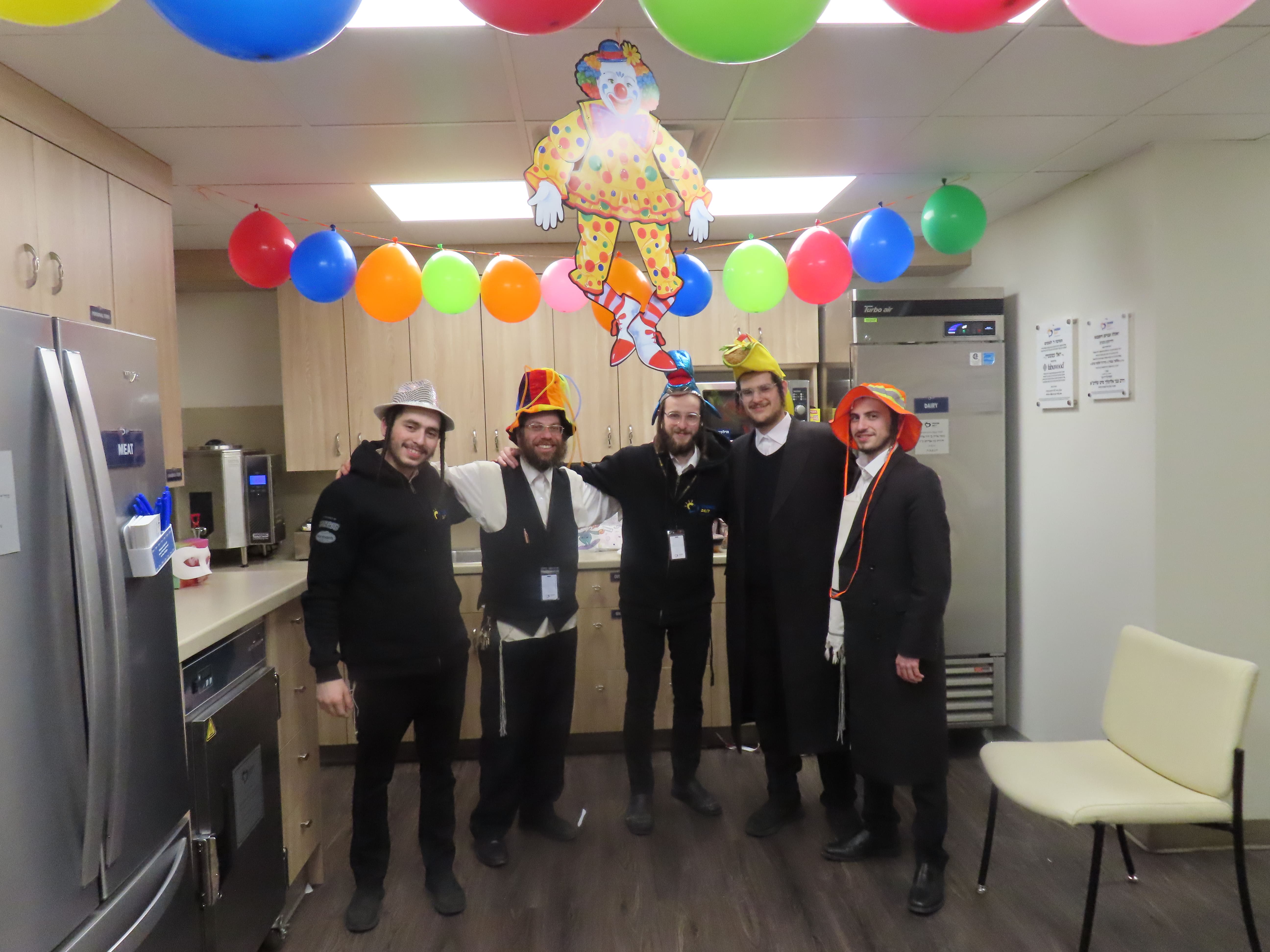
- Decorated Chesed Rooms throughout the hospital network, transformed with Purim-themed decor to bring color, warmth, and a sense of the holiday into spaces that are otherwise clinical and sparse.
- Scheduled megillah leinings in hospitals, bringing a qualified baal koreh directly to patients who would otherwise miss the mitzvah entirely.
- Upgraded meals to a full Purim seudah, featuring traditional Purim foods so patients and their families could mark the day with a proper yom tov meal, not just a standard hospital tray.
- Purim packages with graggers and masks so patients and children in hospital rooms could participate in the simcha of the day in a hands-on way.
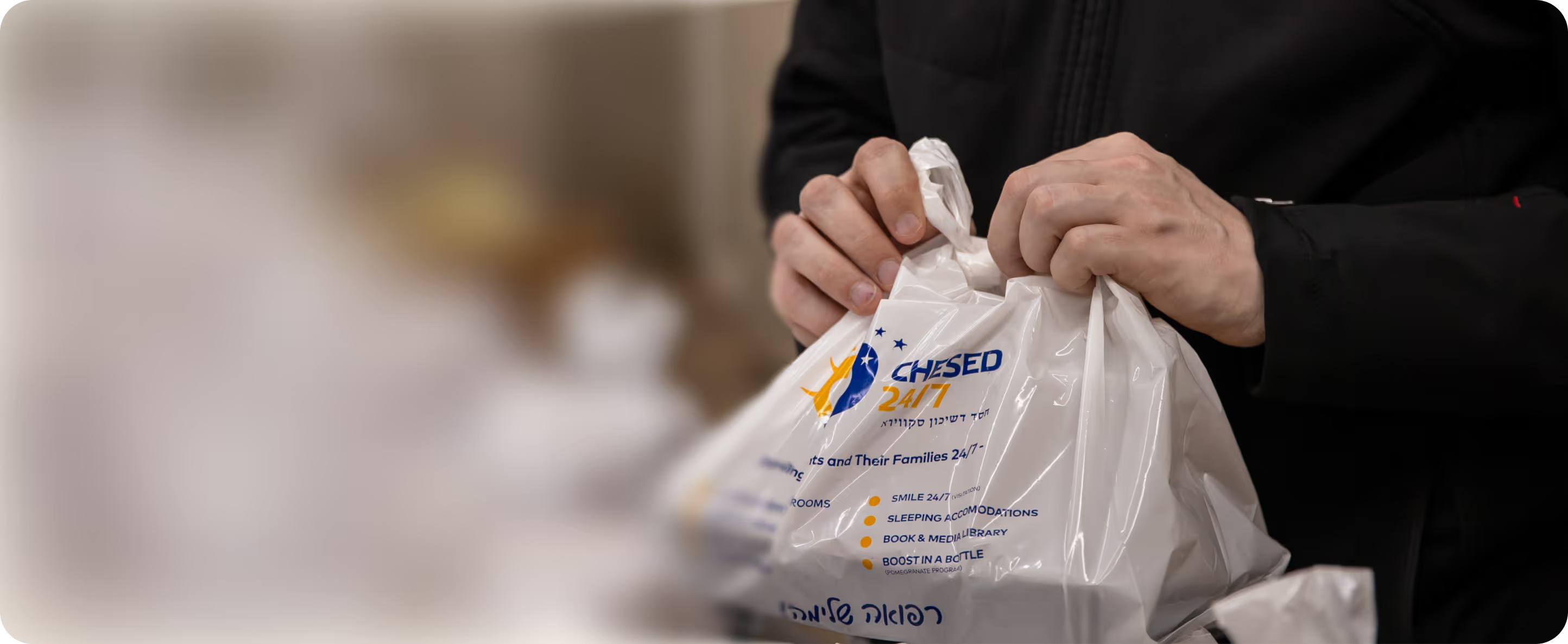
- 1,200 mishloach manos distributed as a token of appreciation to dedicated volunteers and generous donors who make our work possible year-round.
Each piece of this effort required weeks of coordination: collecting patient names and room numbers through hospital liaisons, assembling and packaging mishloach manos, scheduling megillah readers, arranging food preparation, and working with our volunteer network to ensure deliveries reached the right people at the right time.
Megillah Readings in Hospitals
One of the most meaningful parts of our Purim programming is coordinating megillah leinings inside hospitals. A patient confined to a hospital room cannot simply walk to a shul. And yet the obligation remains. We work to close that gap.
Our team coordinates with hospital administration and schedules baalei kriah to read the megillah in patient rooms and Chesed Room facilities. This allows patients, even those who are bedridden or medically restricted, to fulfill the mitzvah of hearing the megillah.
For families whose loved ones are going through difficult treatments or extended hospitalizations, knowing that a baal koreh is coming to read the megillah can be a tremendous source of comfort. Beyond fulfilling the mitzvah, it sends an emotionally supportive message. It says: you are not forgotten. The community is here.
Chesed Rooms Decorated for Purim
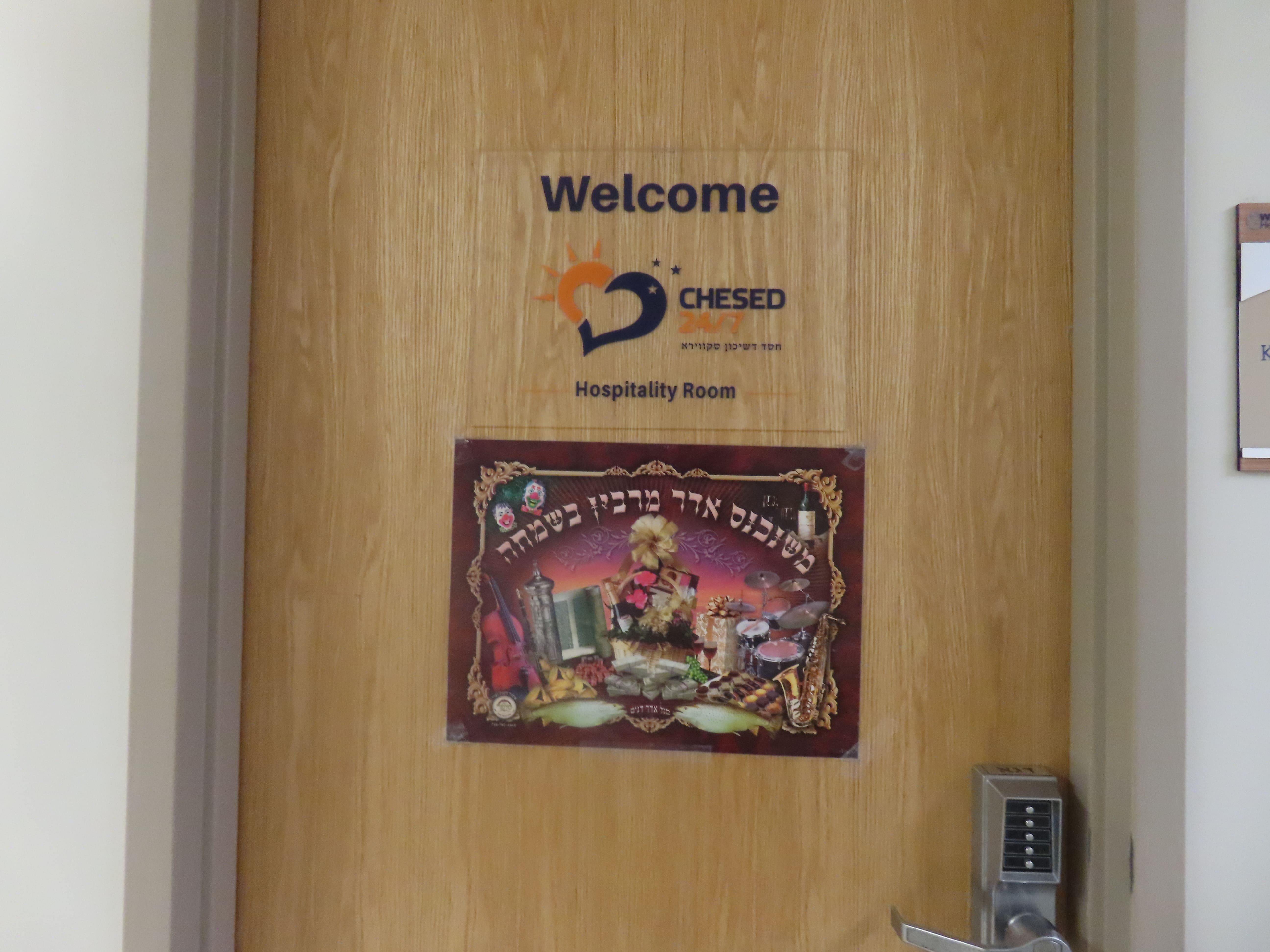
Our Chesed Rooms, the hospitality rooms we maintain inside hospitals to support patients and families, were decorated for Purim this year. Colorful streamers, holiday-themed displays, Purim treats stocked on the shelves, the transformation of these spaces may seem like a small detail, but its effect is real.
For a family that has spent weeks in a hospital, walking into a room that reflects the holiday season restores something. It signals that the calendar is still turning, that the world outside the hospital is still alive, and that someone thought of them. This model of dignified, holiday-sensitive hospitality is what we replicate across every hospital in our network.
The Purim Seudah: Upgrading to a Full Yom Tov Meal
On Purim, our standard daily meal service was upgraded to reflect the seudah. Rather than a regular prepared meal, patients and families in our care received traditional Purim foods, foods that carry the flavor of the holiday and connect to the yom tov in a meaningful way.
Food has always been central to how we support families in crisis. Our Chanukah 2025 efforts, where we distributed over 1,100 items including donuts and holiday treats across 27 hospitals, showed us what holiday food means to a patient who cannot be home. Purim seudah preparations follow the same principle: we work to meet the needs of the season, bringing patients and families the warmth, joy, and traditional flavors of each holiday.
Our food preparation infrastructure, coordinated through our warehouse operations and volunteer food groups, allows us to scale up for holidays and deliver appropriate yom tov meals to patients and families within our service area.
How This Fits Into Our Larger Purim and Yom Tov Mission
Purim is one moment in a year-round commitment to supporting Jewish patients through every holiday and every week. Our Yom Tov Essentials program exists specifically because medical crises don't pause for the Jewish calendar, and families shouldn't have to choose between medical care and religious observance.
The same infrastructure that delivers Purim mishloach manos also supports Shabbos-in-a-Box packages, Yom Tov meals, holiday decorations, and Shabbos candles throughout the year. The Chesed Rooms we decorated for Purim are stocked year-round with food, basic necessities, and a sense of home, open 24/7, at no cost to families.
A new Chesed Room opening at Valley Hospital earlier this year is a reflection of this ongoing expansion: more hospitals, more patients served, more families who don't have to face a holiday, or any day, alone in a hospital corridor.
Impact in Numbers: Purim 2026 at a Glance
Here's a summary of this year's Purim programming:
- 1,200 mishloach manos distributed to patients, families, volunteers, and donors
- Multiple hospitals served across the NY/NJ region, including major Manhattan medical centers
- Megillah readings scheduled and delivered to hospitalized patients
- Purim packages with graggers, masks, and themed treats for patients and children
- Chesed Rooms decorated at hospital locations throughout the network
- Full Purim seudah meals prepared and distributed in place of standard daily meals
- Community volunteers participated in decorating hospital chesed rooms and reading megillah to hospitalized patients and family members
How You Can Support This Work
Programs like this, the mishloach manos, the megillah readings, the decorated rooms, the upgraded seudah meals, are entirely donor-funded. There is no charge to patients or families for any of it.
If you'd like to be part of what makes Purim (and every holiday, and every week) possible for hospitalized patients across NY and NJ, there are a few ways to get involved:
Donate. Contributions to Chesed 24/7 fund the purchasing, packaging, coordination, and delivery of everything described in this text. Every dollar goes toward real, tangible support for families in the middle of a medical crisis. You can give at chesed247.org/donate.
Volunteer. Community members who want to help prepare yom tov meals, assist with holiday deliveries, or participate in chesed initiatives can reach out to our volunteer coordination team.
Spread awareness. If you know a family currently hospitalized, especially heading into a yom tov period, please let them know that Chesed 24/7 is available. Call us at 845-354-3233, available 24/6.
Frequently Asked Questions About Purim in the Hospital
How can patients celebrate Purim when hospitalized?
Chesd 24/7 coordinates Purim programming for hospitalized patients, including mishloach manos deliveries, megillah readings in patient rooms, Purim packages with graggers and masks, decorated Chesed Rooms, and full Purim seudah meals. Patients do not need to leave their rooms to participate.
Are there megillah readings in hospitals?
Chesd 24/7 coordinates scheduled megillah leinings in hospitals so that patients who cannot attend shul can still fulfill the mitzvah. Scheduling is arranged through our team in the hospitals we service.
What food is served for Purim in hospitals?
On Purim, our standard meal service is upgraded to a full Purim seudah with traditional holiday foods. Hospitalized patients can celebrate Purim through Chesed 24/7's coordinated programming, which includes mishloach manos deliveries to rooms, scheduled megillah readings, Purim packages with graggers and masks, decorated Chesed Rooms, and full Purim seudah meals prepared according to halachic standards.
How does Chesed 24/7 support families during Yom Tov in hospitals?
Chesed 24/7's Yom Tov Essentials program provides year-round holiday support, including Shabbos-in-a-Box packages, holiday decorations, and Chesed Rooms stocked 24/7 with food and necessities. The same infrastructure that delivers Purim mishloach manos supports every Jewish holiday throughout the year
[[cta]]





.svg)