How Hospitals Address the Needs of Families
How hospitals address the practical and emotional needs of families during admissions — and where the gaps are filled by Chesed 24/7's parallel infrastructure of rooms, apartments, meals, and presence.
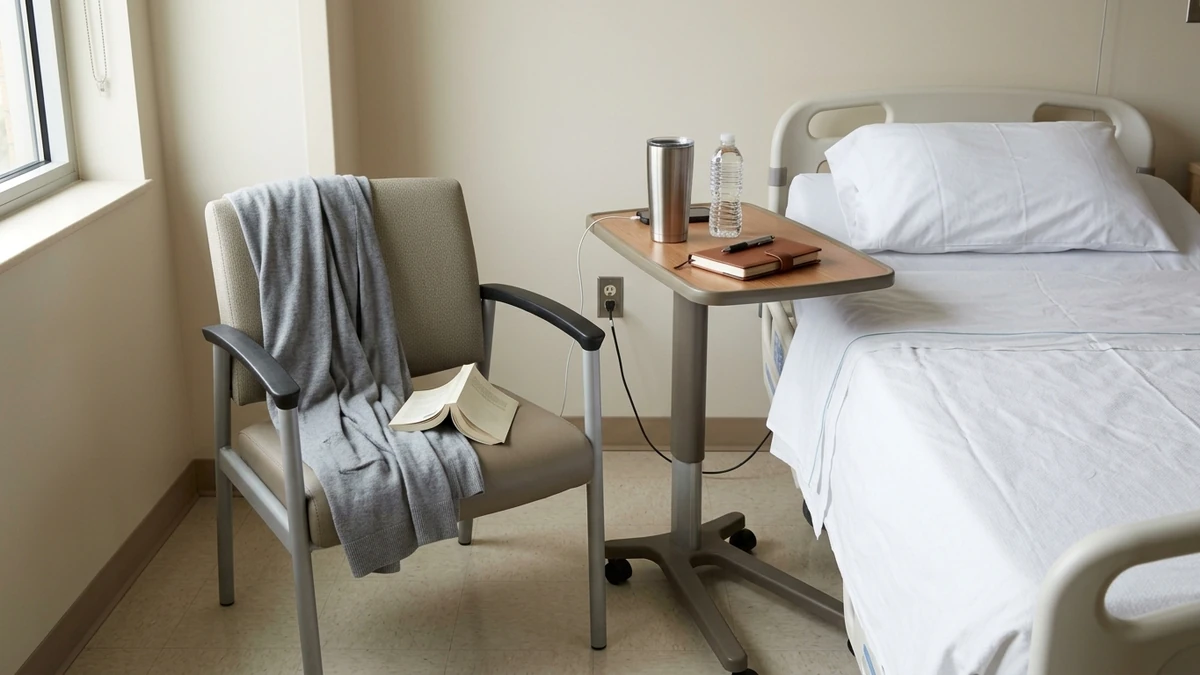
Hospitals are built around the patient. Every system, schedule, and protocol is calibrated to deliver medical care. That focus is necessary — and it leaves a real gap. Family needs in hospitals are extensive, ongoing, and largely outside the scope of what a hospital is designed to handle. The gap gets filled by family members themselves, by community networks, and by organizations like Chesed 24/7 that exist to address what hospitals do not.
What Hospitals Do Address
Most hospitals provide a baseline level of family support through a small set of standard offerings:
- General waiting rooms for short visits
- Cafeteria access during fixed hours
- Hospital social work for discharge planning, financial counseling, and crisis intervention
- Patient relations or patient advocacy departments for complaints and communication issues
- Chaplaincy services of various denominations, depending on the hospital
- Limited overnight accommodation in some pediatric units (typically a chair or pull-out couch in the patient's room)
- Information desks for general directions and visiting policies
These offerings are real and meaningful. They are also designed for short-stay or transactional contact — not the multi-day, multi-week presence many families actually need. Hospital caregiver needs that extend past a few hours quickly hit the edges of what the hospital itself offers.
What Hospitals Generally Don't Address
The gap shows up in five recurring areas. Each one is common, and each one is largely outside the standard hospital offering.
Kosher Food on Demand
Most hospital cafeterias do not stock reliably kosher food. Patients restricted from eating before procedures, or hungry between meal services, often have nothing they can eat. A family member sitting at a bedside for ten hours has the same problem.
Sustained Overnight Lodging
Pediatric units often allow a parent to sleep in the patient's room. Adult units rarely do. Once visiting hours end, family members must leave, find local lodging at hotel rates ($300–$500 per night near major Manhattan hospitals), or sleep in a chair in a waiting room.
Shabbos and Yom Tov Observance
Hospitals are not built around the Jewish calendar. Candles are typically prohibited (with limited exceptions). Wine, challah, a becher, and besamim are not items a hospital supplies. A family admitted on a Tuesday with Shabbos approaching has no built-in path to keep Shabbos in the hospital room.
Religious-and-Community-Aware Advocacy
Hospital social workers and patient advocates do excellent work. They are not, however, expected to know which kosher kitchens are reachable from a specific unit, how to communicate Shabbos restrictions to a discharge planner, or which community contacts can mobilize resources for a frum family in crisis. That kind of advocacy lives outside the standard hospital offering.
How Chesed 24/7 Fills the Gap
Each Chesed 24/7 service exists, in part, to address one of these gaps. Together, the services form a parallel support system that runs alongside the hospital — not replacing the hospital's medical care, but covering what the hospital is not designed to cover.
Inside the Hospital
34 Chesed Rooms across 28 hospitals in NY and NJ provide kosher snacks, hot drinks, comfortable seating, phone-charging, religious items and books, and a quiet space — the family care hospital infrastructure that fills the gap between the cafeteria and the patient's bedside. These rooms are also stocked with Shabbox Boxes with Shabbos essentials for the room, as well as fully prepared food for all Shabbos meals.
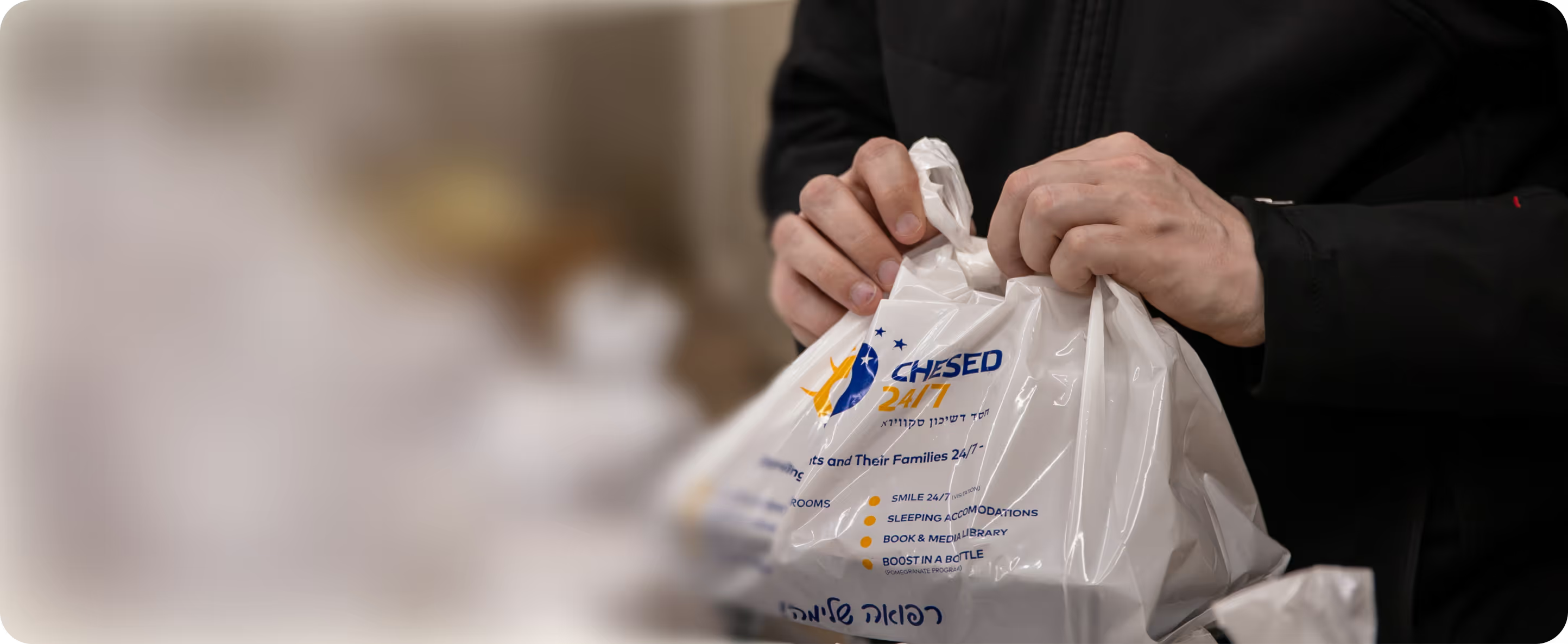
Shabbos in a Box brings a complete Shabbos kit — challah, wine, candles, a becher, besamim, a decorated tablecloth, a flower — to a hospital room before Friday sundown. The kit fits the hospital's safety policies and is approved by halachic guidance.
Hospital liaisons provide community-aware advocacy inside the building. They know each hospital's layout, dietary procedures, and unit-by-unit communication channels.
Daily kosher hospital meals are delivered bedside to patients, prepared in Chesed 24/7's central food operation in Spring Valley.
Around the Hospital
Chesed Apartments — 13 furnished, kosher, 24/7 apartments near major Manhattan and tri-state hospitals — provide overnight lodging at no cost to families with a hospitalized loved one.
Hospital transportation connects Rockland County communities with major Manhattan hospitals, free of charge.
A Real Example of How This Works
In a letter to Chesed 24/7, a patient hospitalized at Valley Hospital described the Chesed Room there as "a lifeline." The room was stocked with food, drinks, phone chargers, books, and other essentials. Throughout the hospitalization, Rabbi Motty Teitelbaum, a Chesed 24/7 representative, was in daily contact — checking on the patient's condition and progress.
What the letter describes is the gap hospitals do not fill. Valley Hospital provided medical care. Chesed 24/7 provided everything else: the food, the supplies, the daily presence, the consistent contact across the entire stay. Both layers of support were essential. Neither replaced the other.
Impact in Numbers
Specific scope of Chesed 24/7's family-needs coverage:
- 28 hospitals with active Chesed Room support across NY and NJ
- 13 Chesed Apartment locations near major Manhattan and tri-state hospitals
- Daily kosher meal delivery to patients across stays of any length
- Weekly Shabbos in a Box kits for any family that requests one
- 2,000+ active volunteers
- 24/7 phone line: (845) 354-3233
How This Connects to Chesed 24/7's Larger Mission
The combined services — rooms, apartments, meals, liaisons, transportation, Shabbos kits, medicine chests, Gift Packages, Smile 24/7 visits, medical equipment loans — make up a parallel support infrastructure for Jewish families navigating hospital care across NY and NJ. The work is intentional. It is not a critique of hospitals. It is a recognition that hospital systems are built for medicine, and family needs in hospitals require something different.
The phone number stays the same in every situation: (845) 354-3233.
How You Can Get Involved
Request Help
Families needing help during a hospital stay — for any of the gaps described above — can call (845) 354-3233 at any hour.
Donate
All Chesed 24/7 services are free to families and supported entirely through donor contributions. Sponsorship options exist for individual rooms, apartments, weekly food preparation, Shabbos in a Box deliveries, Gift Packages, and program expansion. Those who wish to support this work can donate or learn more about sponsorship.
Volunteer
Volunteer roles include warehouse food preparation, hospital meal delivery, room restocking, hospital visits, and Gift Package assembly. Current opportunities are listed on the get involved page.
Frequently Asked Questions
What do families need in hospitals?
Family care hospital needs typically span several categories: reliable kosher food during long hospital hours; overnight lodging when stays extend past a single day; Shabbos and Yom Tov observance items not stocked by hospitals; community-aware advocacy inside the building; and emotional and practical support across the duration of the stay. Chesed 24/7 addresses each of these for Jewish families across NY and NJ.
How are caregivers supported in hospitals?
Hospitals provide some baseline caregiver support — waiting rooms, cafeteria access, social work, chaplaincy. Most hospital caregiver needs that extend past a few hours, however, fall outside the standard hospital offering. Chesed 24/7 fills that gap with Chesed Rooms (kosher hospitality space), Chesed Apartments (overnight lodging), kosher hospital meals, hospital liaisons, transportation, Shabbos kits, Gift Packages, and Smile 24/7 visits.
Do hospitals provide kosher food?
Most hospitals do not stock reliably kosher food in cafeterias or patient rooms. Some hospitals offer pre-packaged kosher meal trays on request, but availability and quality vary. For consistent kosher food during a hospital stay, families typically rely on outside sources. Chesed 24/7 delivers daily kosher hospital meals bedside and stocks 34 Chesed Rooms with kosher snacks, drinks, and prepared foods.
Can family members sleep at the hospital?
Some hospitals — particularly pediatric units — allow a parent or family member to sleep in the patient's room, typically in a chair or pull-out couch. Adult units generally do not. For overnight lodging during longer stays, Chesed 24/7's 13 Chesed Apartments near major Manhattan and tri-state hospitals provide free, fully furnished, kosher lodging.
What support exists for Shabbos in a hospital?
Hospitals do not stock Shabbos items. Chesed 24/7's Shabbos in a Box program delivers a complete kit — challah, wine, candles, a becher, besamim, and other essentials — to a hospital room before Friday sundown. Families request a box by Thursday evening for Friday delivery.
[[cta]]





.svg)