A Hospital Liaison's View from the Floor
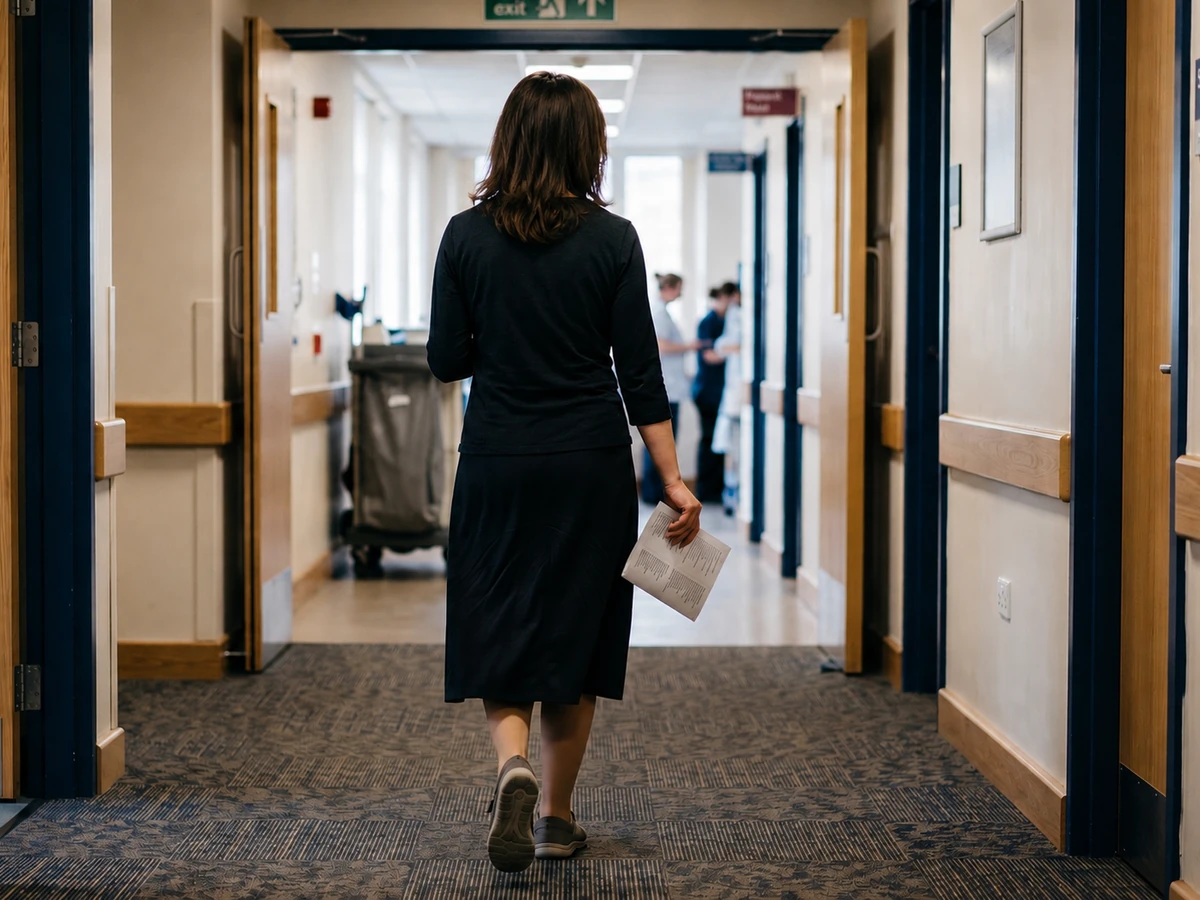
She takes her call in her car, on the way in. Traffic on the FDR is heavy this morning, so she'll be a little late, but her first stop is outpatient infusion, and infusion always runs long. There will be time.
She has been a hospital liaison for Chesed 24/7 for six and a half years. She spent the first months of her role working through the badging process, which had to be resubmitted before it was finally approved. She spends the last hour of most days figuring out what needs to happen tomorrow. In between, she walks the floors.
What a Day Actually Looks Like
The badge lets her open doors that would otherwise be locked. That is not a small thing. She can walk into the NICU, the psych ward, the surgical waiting rooms, the antepartum and postpartum floors. She can check on the Chesed Room to see if it needs cleaning or restocking. She can visit the chaplaincy office to pick up a list of heimishe patients who requested kosher food, and use that list to reach the floors and offer whatever help she can.
She goes in three days a week. Some days she is inside the hospital for a few hours. Some days she is there for what feels like the whole day. She does not count.
The job also has a piece of it that never appears on paper: travel time, phone calls in the car, coordination with our office, with our warehouse, with drivers, with families she has already met and families she has not yet met. The paid work is what she does inside the hospital. The rest of what she does is her own.
Every Patient Is a World
You can walk into two rooms in the same wing of the same hospital, she says, and find nothing similar. Same machinery. Same medical situation on paper. Two entirely different families. Two entirely different needs.
Some patients are protective of their privacy in a way that is unequivocal. They do not want a stranger walking in. They nod politely and wait for her to leave. She lets them.
Other patients want her to stay. Some want her to stay for twenty-five or thirty minutes and hold their hand through something critical. Some want to talk about the family they cannot get here today. Some want to know if there is any way to get a decent cup of coffee onto the floor before their spouse arrives at the end of a nine-hour shift.
She learns each patient one at a time. The families teach her more than the medical charts do.
Working Within the Building
The hospital has its own rules and its own culture. Every hospital does. The job of a liaison is to be the bridge between what a patient needs and what a hospital can allow, and that bridge has to be built with respect for both sides. Nothing she does can compromise the relationship Chesed 24/7 has with the hospital, because that relationship is what gives her the access to do the work in the first place. When she has the slightest doubt about a request, she calls our office and asks.
The badge helps and it also limits. There are things she can do because of it. There are things she cannot do because of it. Balance, she says, is constant.
Some days she can help expedite a family into a room. Some days she can walk down to radiology on behalf of a patient. Some days she can arrange for a fridge to be brought into a room. Some days the answer is no, and the answer stays no.
The Question of Ego
The most common way a family thanks her is for getting them a room.
"I didn't get you a room," is what she says back. "Hashem got you a room. We do the hishtadlus. It's all in His hands."
She means it. She has been at this long enough to know that the moments she is proudest of are the ones where she walked into a room at the moment a family was saying they needed something — and there she was, holding exactly that thing. Hameichin mitzadei gaver. God directs a person's steps.
She was once offered a job in a different setting for more than double the pay. She almost took it. Her husband told her that job satisfaction was worth more than the raise. She called a rav to ask, and he told her to stay. She called the Chesed 24/7 office afterward to say she had turned down a much more lucrative offer, and was told that only Hashem could repay her for that decision.
She stayed.
What the Job Is Actually About
There are days when a staff member says something unkind to her. She reminds herself that these are Hashem's way of keeping her from getting ahead of herself. On days when patients tell her she has no idea what a difference she is making, she tells herself the same thing in reverse.
The Greenbergs, she says, are the model. When Rabbi Greenberg speaks about the work, he calls his volunteers his colleagues. He does not describe himself as their supervisor. He does not describe himself at all. Something needs to be done, so it is done.
That is the mantra she has taken from her time at Chesed 24/7. Something needs to be done. We do it.
She parks the car, closes the call, and walks in through the main entrance. Her first stop is infusion. She'll figure out the rest as she goes.
[[cta]]






.svg)