Digital Camera vs. Phone Camera: Why More People Are Separating Photography From Their Phones
Digital camera vs phone camera: discover where standalone cameras still win, when your phone is enough, and how to build a distraction-free photo setup in 2026.
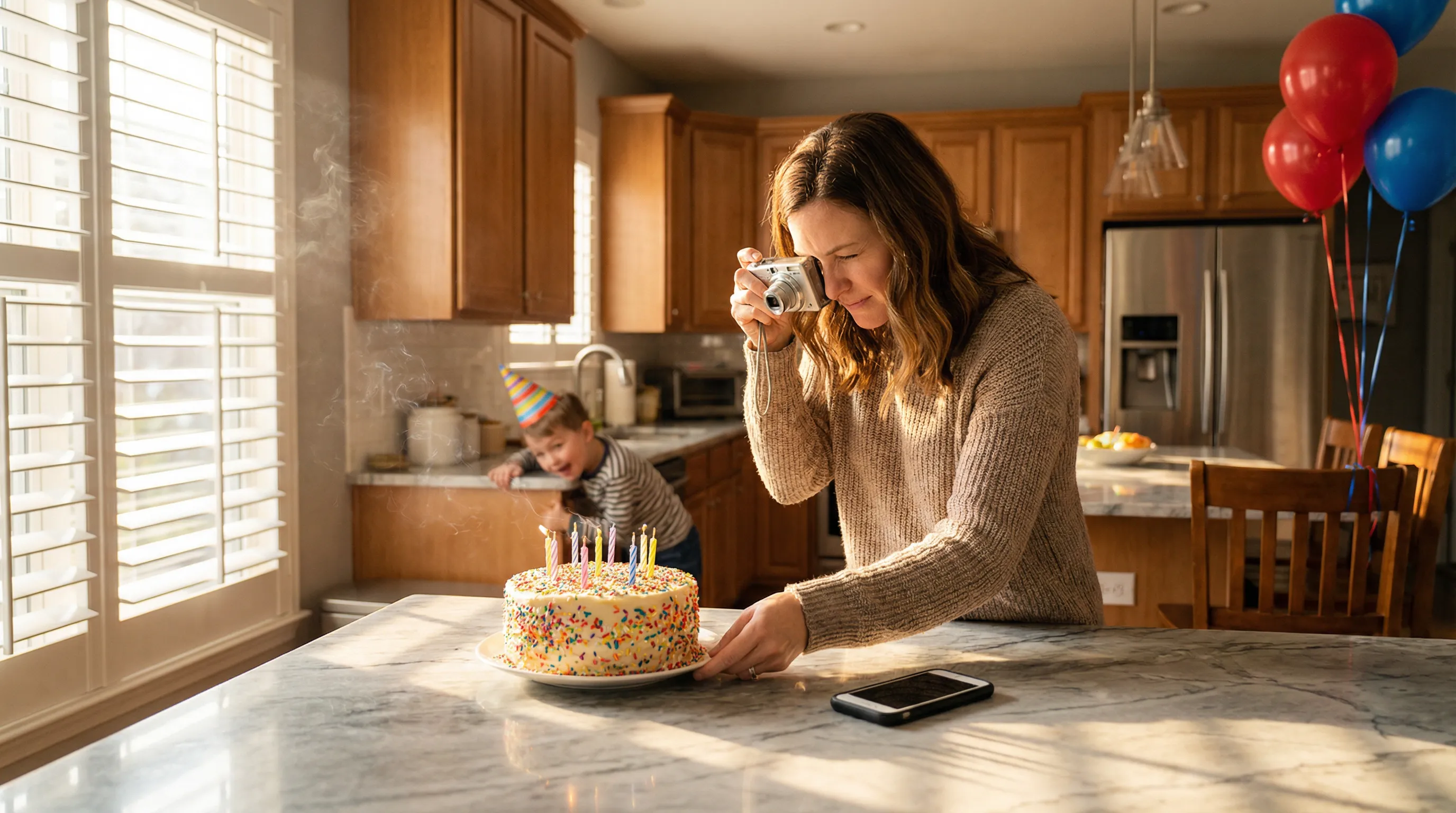
You've probably noticed it yourself. You pull out your phone to snap a photo of your kid's birthday cake, and twenty minutes later you're scrolling through notifications, emails, and whatever else popped up on screen. The photo? It's fine. But the moment? That's gone.
This is the quiet trade-off millions of people make every day when they rely on a phone camera as their only camera. And it's why the digital camera vs. phone camera conversation isn't really about megapixels or sensor size. It's about what kind of experience you want photography to be, and what you're willing to give up for convenience.
We're going to break down where standalone digital cameras still have a clear edge, when a phone camera genuinely makes more sense, and how to build a setup that lets you take great photos without handing your attention over to a screen full of distractions.
How Phone Cameras Changed Photography (And What We Lost Along the Way)
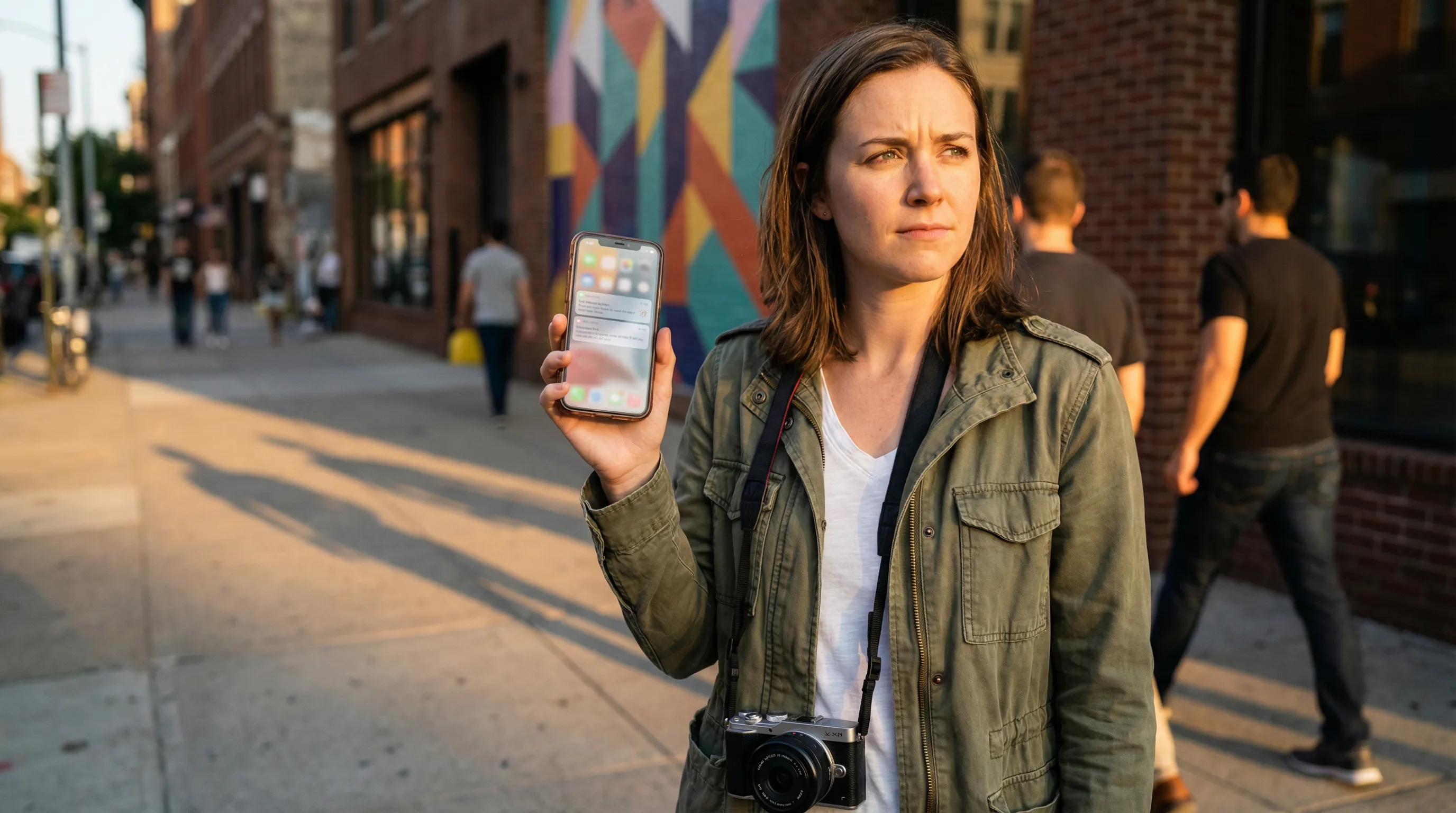
Let's give credit where it's due. Phone cameras have gotten remarkably good over the past decade. Studies show they've improved roughly 4 to 4.5 stops in quality, mostly through computational processing gains (about 3 EV) and better sensors (about 1.3 EV). That's a massive leap. A phone from 2015 and a phone from 2025 aren't even in the same universe when it comes to photo quality.
This made photography effortless. Suddenly everyone had a decent camera in their pocket, all the time. No extra gear. No thinking about settings. Just point, tap, done.
But here's what got lost in the process: predictability and creative control. Modern phone cameras lean heavily on AI processing. Your phone decides how to handle exposure, color grading, sharpening, sometimes even compositing multiple frames together before you see the result. The photo you get isn't always the photo you took. It's the photo your phone thinks you wanted.
For casual snapshots, that's fine. For anyone who wants to understand light, composition, or exposure, or who wants consistent, repeatable results, phone cameras can actually make learning harder. The automation hides the fundamentals.
And then there's the bigger issue. When your camera lives inside the same device as your email, social media, and news feed, photography stops being a standalone activity. It becomes another reason to pick up the phone. One of the real drawbacks of relying on a flip phone camera, or any phone camera, is that the device is designed to pull you in, not let you focus on the shot.
Where Digital Cameras Still Outperform Phone Cameras
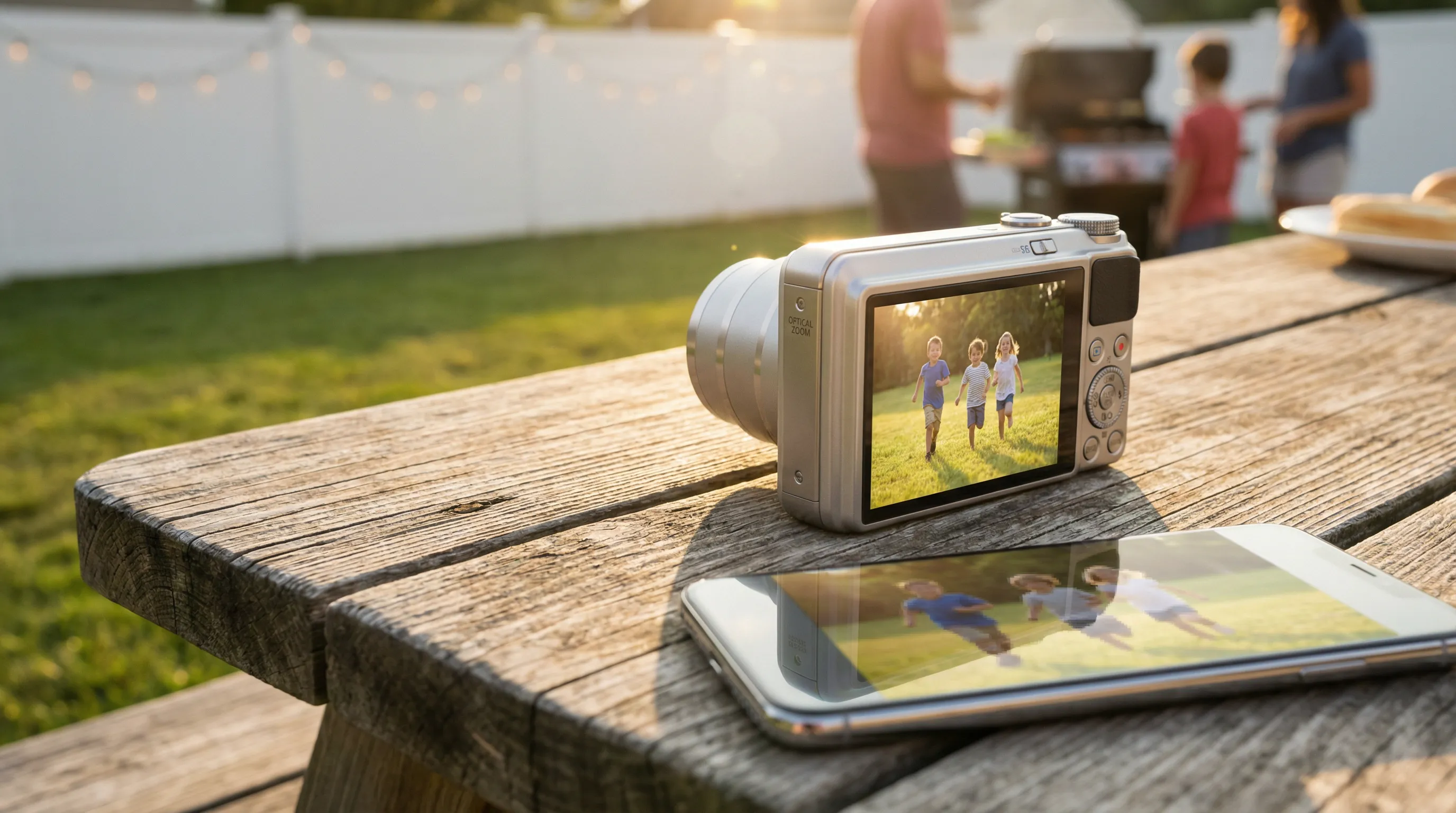
Even though all the marketing hype around phone camera upgrades, standalone digital cameras still hold meaningful advantages. And these aren't niche, photographer-only differences, they matter for everyday users too.
Image Quality and Optical Zoom
The single biggest advantage a digital camera has is sensor size. A larger sensor captures more light, more detail, and more color information. That translates to sharper enlargements, better prints, and photos that hold up when you crop in.
Zoom is where the gap gets dramatic. A phone's "zoom" beyond about 2x is almost entirely digital, it's just cropping and upscaling, which degrades quality fast. A dedicated camera with true optical zoom uses glass lenses to magnify without losing detail. Even 15-year-old point-and-shoot cameras with 4x optical zoom produce cleaner zoomed images than most current phones.
Take a camera like the Samvix UCamera X9200 with its 12x optical zoom. That's genuine optical magnification, no digital tricks, no quality loss. You're getting sharp, usable images at distances a phone simply can't match. The X9200 also shoots 5K video with 48MP interpolated resolution, which is serious capability for a compact camera.
For anyone who regularly photographs events, landscapes, or kids playing across a field, this difference isn't subtle. It's the difference between a clear photo and a blurry one.
Battery Life, Storage, and Durability
Here's a practical advantage people overlook: a standalone camera doesn't drain your phone battery. If you've ever been at a family event and watched your phone die at 3 PM because you've been taking photos and videos all day, you understand this problem immediately.
Dedicated cameras also tend to be more durable for their specific purpose. They're built to be held, aimed, and handled, not to be a thin glass rectangle that shatters on concrete. Models like the Samvix UCamera X8400 are designed purely for photography, with 4K video capability and 12x optical zoom in a body that's meant to take some bumps.
Storage is a trade-off. You'll need to transfer photos to a computer or other device, which is an extra step. But MicroSD cards are cheap, and the workflow of intentionally reviewing and organizing your photos can actually be a plus, instead of 4,000 unreviewed images cluttering your phone's storage.
When a Phone Camera Is the Better Choice
We're not going to pretend standalone cameras win every scenario. Phone cameras have real strengths.
For spontaneous, unplanned moments, a funny sign on the street, a sunset you didn't expect, a quick shot of a receipt for your records, nothing beats having a camera that's already in your hand. The best camera is the one you have with you, and your phone is always with you.
Phone cameras also excel for beginners who aren't ready to learn manual settings. Night mode, burst mode, portrait mode, these automated features produce good results with zero effort. And if you need to share a photo immediately, a phone with data connectivity makes that instant.
For travel, phones save weight and space. One less thing to charge, one less thing to lose.
But here's the honest question worth asking: how many of the photos you take on your phone are ones you actually look at again? For most people, the answer is a surprisingly small percentage. The ease of phone photography can lead to taking hundreds of throwaway shots instead of a few intentional ones.
The Hidden Cost of Carrying a Camera Phone
This is the part of the digital camera vs. phone camera debate that rarely gets discussed.
When your camera is your phone, every time you reach for it to take a photo, you're also reaching for your inbox, your notifications, and whatever else is waiting on screen. The act of photography becomes tangled with every other digital demand on your attention.
We hear from customers all the time who say the same thing: "I picked up the phone to take a picture of my kid, and ten minutes later I was checking work emails." It's not a willpower problem. It's a design problem. Phones are built to keep you engaged.
There's also a subtler cost. Because phone cameras automate so much, they can actually prevent you from learning real photography principles. Exposure, aperture, shutter speed, composition, these are skills that make you a better photographer, and they're skills that a point-and-tap phone camera actively hides from you.
Separating your camera from your phone solves both problems. You pick up a camera, you take photos, you put it down. No inbox. No notifications. No rabbit holes. Just the moment in front of you.
If you want a dedicated device for your kids to explore photography without any connectivity concerns, there are cameras built specifically for younger users that have no WiFi, no Bluetooth, just a camera.
How to Build a Setup That Works for Your Life
The best approach for most people isn't choosing between a digital camera and a phone camera. It's using both, intentionally.
Choosing the Right Standalone Camera for Your Needs
Start by thinking about what you actually photograph most. Family events? Nature? Everyday moments? Your answer shapes which camera makes sense.
For versatile everyday use with high image quality, the Samvix UCamera S7 is a solid option, 44MP resolution, 16x zoom, and no WiFi or Bluetooth, so it's purely a camera. It comes in both a video-capable version and a photos-only version, so you can match it to what you actually need.
If you want maximum capability, the Samvix UCamera X9200 offers 5K video recording and 12x optical zoom with a full touchscreen interface. For a balance of features and value, the Samvix UCamera X8400 delivers 4K video and 12x optical zoom at a lower price point.
The key is prioritizing sensor quality and real optical zoom over flashy megapixel numbers. A camera with genuine 12x optical zoom will outperform a phone's 48MP digital zoom in almost every real-world scenario.
Pairing a Camera With a Simpler Phone
Here's where the setup gets interesting. If you carry a dedicated camera for photos, your phone doesn't need a great camera, or any camera at all. That opens the door to simpler phones that do less and distract less.
Many of our customers pair a standalone camera with a phone focused on calls and essential media features. The phone handles communication. The camera handles photography. Neither device tries to do everything, and both do their job better as a result.
Some go even further. The Wonder Phone, for example, has a capable 21MP camera built in plus Waze navigation and a 14-day battery life, but no browser, no social media, no app store. For people who want some camera capability on their phone but don't want the full distraction package, it's a middle ground worth considering.
A phone focused purely on talk and text without a camera paired with a quality standalone camera can be a genuinely freeing combination. You get better photos and fewer distractions. That's a trade most people are happy to make once they try it.
Conclusion
The digital camera vs. phone camera question used to be about convenience versus quality. It still is, partly. But in 2026, it's also about something deeper: whether you want your photography mixed into the same device that demands your attention all day long.
Standalone cameras take better zoomed photos, preserve your phone battery, and let you be present while you shoot. Phone cameras are unbeatable for spontaneous, shareable moments. The smartest move is often using both, a dedicated camera for when quality and presence matter, and a simpler phone for everything else.
Looking for Something Different?
Not everyone needs a standalone camera. If your main concern is having a phone with a solid built-in camera but without social media and browser distractions, the Wonder Phone has a 21MP camera, and the Fig Flip II Pro offers 50MP. Both give you photo capability without the attention trap.
Why KosherSignal
If you're ready to separate photography from distraction, we can help you find the right setup. We carry the full Samvix camera line, from the UCamera S7 for everyday shooting to the X9200 for advanced users, all without WiFi or Bluetooth connectivity. Pair one with a simple phone like the Wonder Phone or any of our talk-and-media devices, and you've got a setup that takes great photos without pulling you into a screen.
Every device ships configured and ready to use. Our 24/6 live chat team can help you match a camera and phone to your specific needs, and we ship nationwide. No guesswork, no hassle, just the right tools for your life.
Frequently Asked Questions
What is the main advantage of a digital camera vs. phone camera for zoom photography?
The biggest advantage is true optical zoom. Phone cameras degrade quickly beyond 2x because they rely on digital cropping. A dedicated digital camera with optical zoom, like a model offering 12x or 16x magnification, uses glass lenses to maintain full sharpness and detail at distance—producing dramatically cleaner results.
Why do phone cameras make it harder to learn photography?
Phone cameras rely heavily on AI processing that automatically handles exposure, color grading, and sharpening behind the scenes. This hides fundamental photography principles like aperture, shutter speed, and composition. A standalone digital camera gives you more manual control, making it easier to understand how light and settings affect your images.
Can I use both a digital camera and a phone camera together?
Yes, and it's the smartest approach for most people. Use a dedicated digital camera for events, travel, or any situation where image quality and presence matter. Keep a simpler phone for spontaneous snapshots and communication. This way, you get better photos without the distractions of a smartphone screen.
How does using a phone camera affect focus and attention?
When your camera lives inside the same device as email, social media, and notifications, every photo session risks becoming a distraction. Many users report picking up their phone to photograph a moment, then losing minutes to unrelated apps. A standalone digital camera eliminates this problem entirely—you shoot, then put it down.
What should I look for when choosing a standalone digital camera over a phone?
Prioritize sensor size and genuine optical zoom over high megapixel counts. A larger sensor captures more light and detail, producing sharper prints and better low-light results. True optical zoom of 12x or more outperforms any phone's digital zoom. Also consider battery life, durability, and whether the camera avoids WiFi or Bluetooth for a distraction-free experience.
Are phone cameras better than digital cameras for beginners?
For absolute beginners who want zero learning curve, phone cameras are convenient—automated modes like night, portrait, and burst produce decent results instantly. However, if a beginner wants to actually develop photography skills, a digital camera with manual controls is the better long-term investment for understanding exposure, composition, and light.













































.svg)