Best Digital Cameras for People Who Want to Leave the Smartphone Behind
Find the best digital camera for your lifestyle. Compare top point-and-shoots, travel cameras, and no-WiFi options with expert tips on sensors, zoom, and staying present.
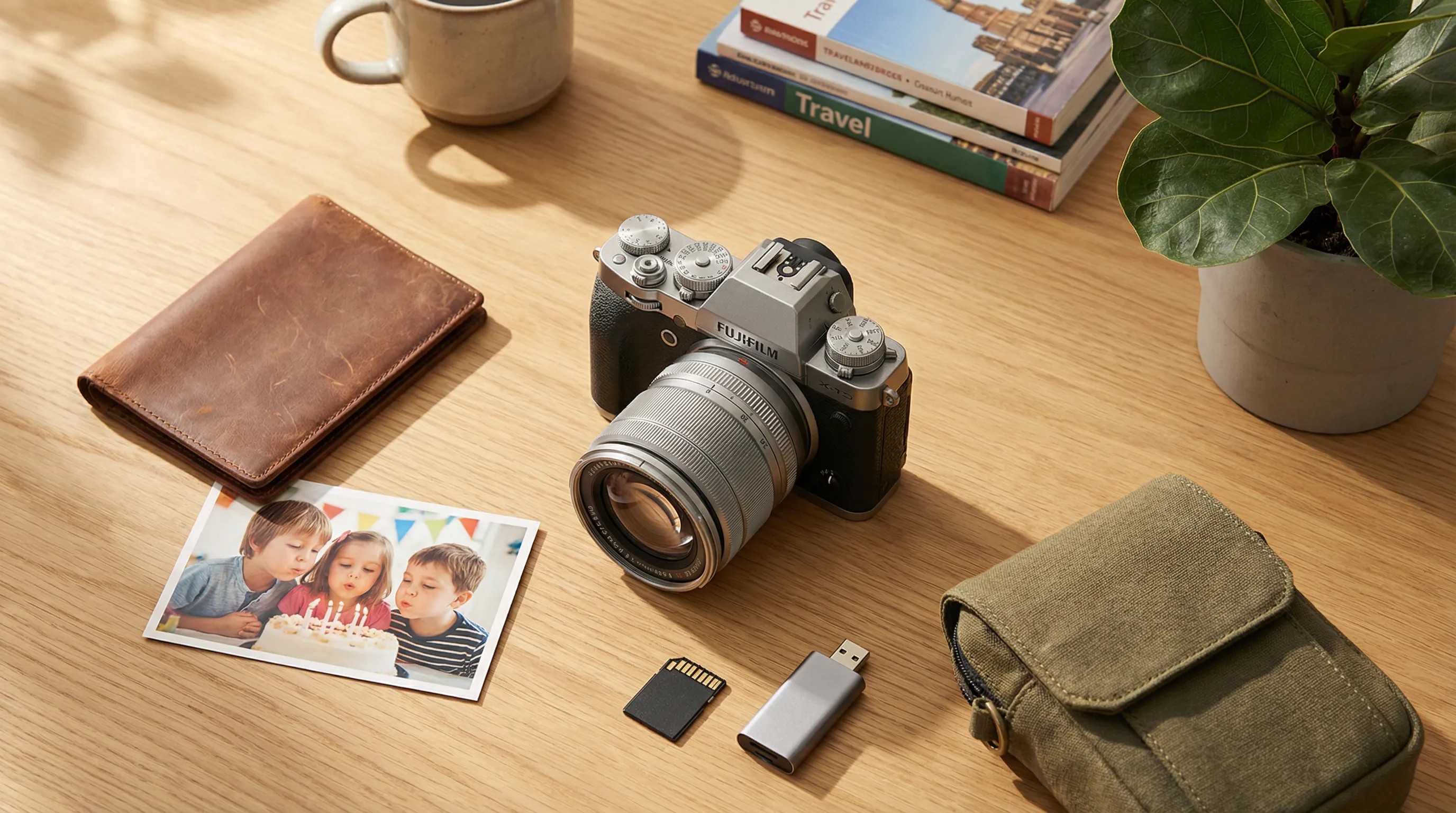
You pick up your phone to check the time and, twenty minutes later, you're deep in a scroll hole. Sound familiar? That's one reason standalone digital cameras are making a serious comeback. The best digital camera for your life isn't necessarily the one with the most megapixels or the fanciest features. It's the one that lets you capture moments without pulling you into a vortex of notifications, social media, and endless distractions.
Whether you're documenting family milestones, traveling light, or just rediscovering the joy of intentional photography, a dedicated camera changes the experience. We've spent years helping people find technology that serves them, not the other way around. In this guide, we'll walk through what actually matters when choosing a digital camera, highlight some of the best options for everyday shooting and special occasions, and show you how to manage your photos without needing a smartphone in the loop.
Why a Standalone Camera Still Makes Sense
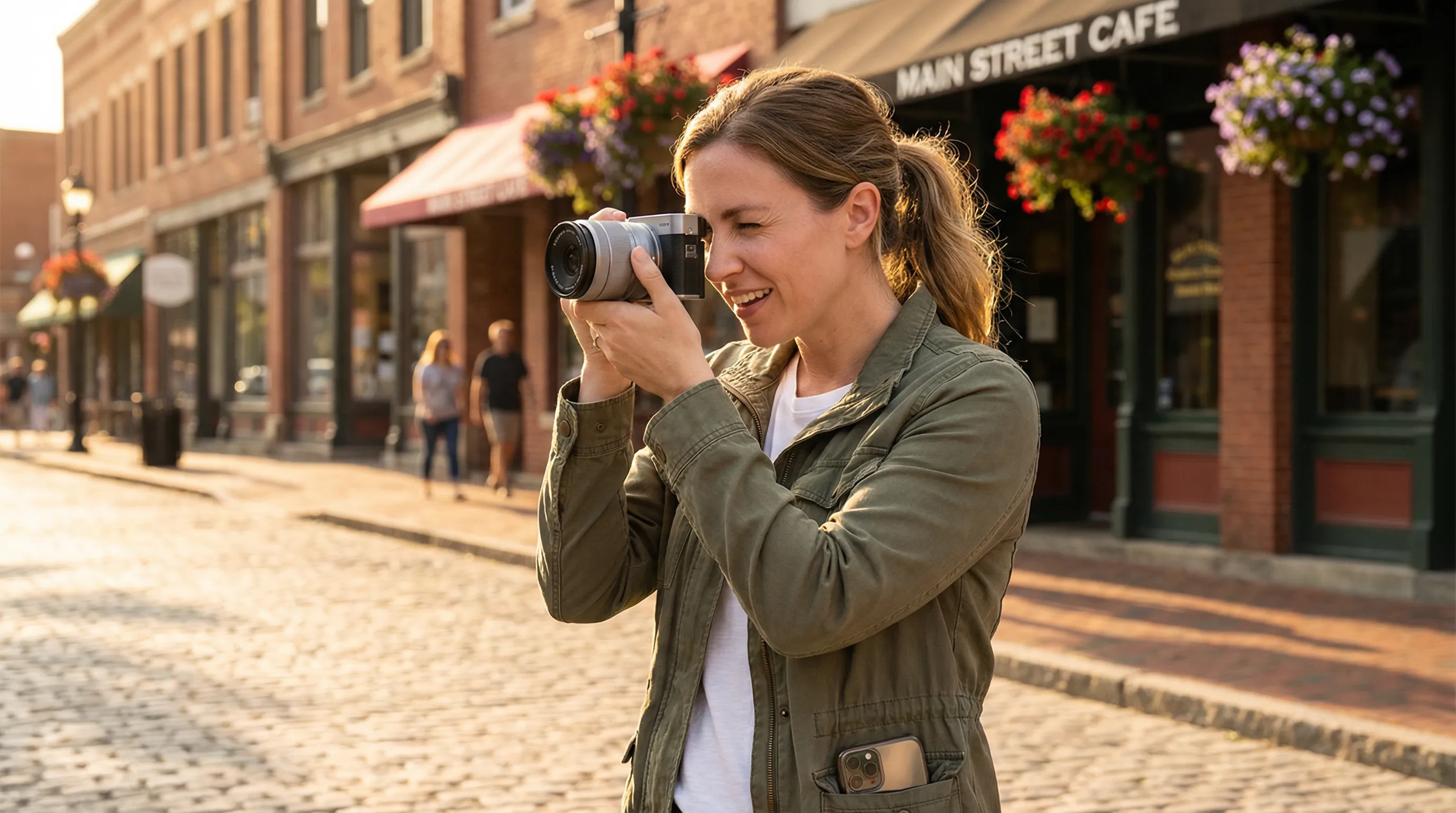
There's a reason professional photographers never switched to phone cameras. Dedicated cameras offer bigger sensors, real optical zoom, and manual controls that no phone can match. But you don't have to be a professional to benefit.
A standalone camera does one thing: takes pictures (and sometimes video). That's it. No buzzing notifications. No temptation to "just check" your email. You frame a shot, click, and stay present in the moment. For parents at a school recital, travelers exploring a new city, or anyone who's tired of their phone hijacking every experience, that simplicity is the whole point.
There's a practical side too. Larger sensors mean better low-light performance, richer color, and images that actually look good printed and framed. Optical zoom lenses get you closer to the action without turning your photo into a pixelated mess. And battery life? Most dedicated cameras last hundreds of shots on a single charge. Try that with a phone running GPS, messaging, and a camera app simultaneously.
The market has noticed this shift. Camera sales have been climbing as more people look for screen-free ways to stay creative. It's not about rejecting technology. It's about choosing the right tool for the job.
What to Look for in a Digital Camera
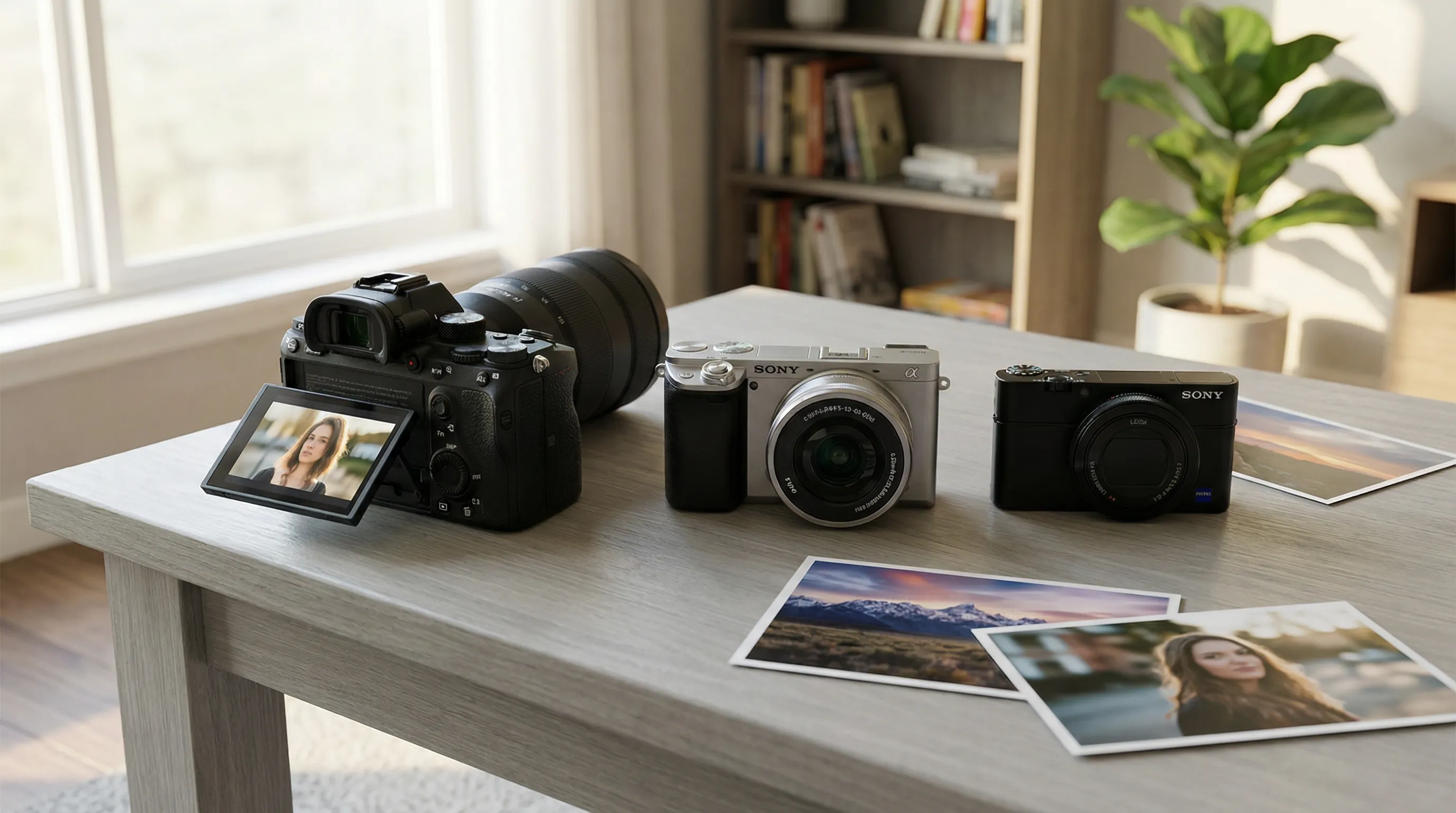
Before you start comparing models, it helps to know which specs actually matter, and which ones are mostly marketing fluff.
Image Quality and Sensor Size
Sensor size is the single biggest factor in image quality. Larger sensors capture more light, produce less noise in dim conditions, and create that pleasing background blur (bokeh) that makes portraits pop.
Here's the quick hierarchy:
- Full-frame sensors, The gold standard. Found in higher-end cameras. Outstanding detail and dynamic range.
- APS-C sensors, A sweet spot for most people. Excellent quality in a smaller, more affordable body.
- 1-inch sensors, Common in premium compact cameras. Noticeably better than phone cameras, but smaller than APS-C.
- Smaller sensors, Found in budget point-and-shoots. Fine for casual snapshots in good light.
Megapixels get all the headlines, but they're only part of the story. A 20MP camera with a large sensor will almost always outperform a 48MP camera with a tiny one. That said, higher megapixel counts do give you more room to crop photos later, which is handy.
For a camera that genuinely outperforms what's built into your phone, aim for at least a 1-inch sensor. APS-C is even better if your budget allows.
Ease of Use and Portability
The best camera is the one you actually carry. A bulky DSLR sitting at home doesn't take better pictures than a compact camera in your pocket.
Look for:
- Weight and size, Can you toss it in a bag or jacket pocket without thinking twice?
- Intuitive controls, Physical dials and buttons beat digging through menus. Some cameras offer a fully automatic mode that handles everything for beginners.
- Screen quality, A bright, tilting screen makes it easier to shoot from different angles, especially with kids or in crowds.
- Battery life, 300+ shots per charge is a reasonable baseline. Some compact cameras push past 400.
If you want something you'll actually bring everywhere, prioritize compact size and simple controls over having every feature imaginable.
Best Point-and-Shoot Cameras for Everyday Use
Point-and-shoot cameras are the closest thing to "grab and go" photography. No lens swapping, no complicated settings, just pull it out and shoot.
For everyday use, the Fujifilm X100VI is the camera everyone's been talking about. It packs a 40MP APS-C sensor behind a sharp f/2 fixed lens. The image quality rivals cameras twice its size, and Fujifilm's film simulation modes produce gorgeous JPEGs straight out of the camera. No editing required. It's not cheap, and it's been tough to find in stock, but there's a reason for the hype.
The Ricoh GR IV is another standout. It's genuinely pocketable, about the size of a deck of cards, yet houses a full APS-C sensor. The image quality is remarkable for something this small. It's a favorite among street photographers and anyone who wants serious results without carrying a serious camera bag.
If you're looking for something more budget-friendly, the Canon PowerShot V1 is worth a look. Its 1-inch sensor is smaller than APS-C but still leagues ahead of phone cameras. It's got an articulating screen that's great for selfies or vlogging, and the compact body makes it easy to slip into a pocket.
Now, if you want a camera specifically designed without WiFi or Bluetooth, keeping things truly disconnected, our inventory includes options built for exactly that purpose. The Samvix UCamera S7 is a 44MP camera with 16x zoom that ships with no wireless connectivity at all. It's available in both a video-capable version and a photos-only version, so you can pick the one that fits your needs. At $139.99, it's one of the most affordable ways to get a high-resolution, distraction-free camera.
Best Cameras for Family Events and Travel
Family events and travel demand a camera that's versatile, reliable, and easy to use when things are moving fast. You don't get a second take on your kid blowing out birthday candles.
The Fujifilm X-T5 is a fantastic choice for events. Its 40MP sensor captures incredible detail, the autofocus is fast and accurate (even tracking moving subjects), and the interchangeable lens system means you can adapt to any situation, wide-angle for group shots, telephoto for candids from across the room. It's a bit more of an investment, but the image quality will make you glad you brought it.
For travel specifically, the OM System OM-5 Mark II is hard to beat. It's weather-sealed (rain, dust, cold, no problem), has outstanding in-body image stabilization for handheld shooting, and the Micro Four Thirds body keeps things compact enough for a daypack. If you're hiking, exploring, or shooting in unpredictable conditions, this camera won't let you down.
The Sony ZV-E10 II is a great hybrid option if you want both photos and video. It shoots clean 4K video, has a flip-out screen, and the autofocus is among the best in its class. Perfect for parents who want to capture video of recitals and photos at family dinners without carrying two devices.
For families who want a dedicated camera without any internet connectivity, the Samvix UCamera X8400 is a strong pick. It features a 48MP sensor (interpolated), genuine 12x optical zoom for getting close to the action from your seat, and 4K video recording, all without WiFi. It's currently on sale at $189.99. The 12x optical zoom is particularly useful at events where you can't always get close to the stage.
Want even more capability? The Samvix UCamera X9200 steps things up with 5K video, a full touchscreen interface, and the same 48MP sensor and 12x optical zoom. At $249.99, it's the top of the line for anyone who wants high-resolution photos and video in a camera that stays completely offline.
Transferring Photos Without a Smartphone
Here's the question we hear all the time: "If I don't have a smartphone, how do I get photos off the camera?"
Good news, it's simpler than you'd think.
SD card reader. This is the most straightforward method. Pop the SD or MicroSD card out of your camera, plug it into a card reader connected to your computer, and drag your photos over. Card readers cost under $15 and work with virtually any computer. Many laptops have built-in SD card slots already.
USB cable. Most cameras come with a USB cable (often USB-C these days). Connect the camera directly to your computer, and it shows up like an external drive. Copy the files and you're done.
WiFi transfer to a computer. Some cameras, including models from Fujifilm, Canon, and Sony, can transfer photos directly to a laptop or desktop over WiFi, no phone required. You'll need the manufacturer's desktop software, but it works.
Print directly. Some photo printers accept SD cards directly. You can print at home without a computer or phone in the loop at all.
The cameras in our lineup, like the Samvix UCamera S7 and Samvix UCamera X8400, are designed without WiFi or Bluetooth. That's a feature, not a limitation, no wireless connection means no accidental syncing, no cloud uploads you didn't ask for, and no privacy concerns. Transfer happens on your terms, with a cable or card reader.
Choosing the Right Camera for Your Lifestyle
With so many options, how do you actually decide? Start with honesty about how you'll use it.
If you want maximum simplicity: A point-and-shoot like the Ricoh GR IV or the Samvix UCamera S7 keeps things uncomplicated. Turn it on, point, shoot. No lenses to swap, no menus to navigate. The Samvix S7 goes a step further by eliminating wireless connectivity entirely, just a camera and your creativity.
If family events are your priority: Zoom matters. The Samvix UCamera X9200 and Samvix UCamera X8400 both offer 12x optical zoom, so you can capture clear close-ups from the back of an auditorium. The X9200 adds 5K video and a touchscreen if you want the full package.
If you travel a lot: Portability wins. The Fujifilm X100VI or Ricoh GR IV fit in a jacket pocket. For a disconnected travel camera, the Samvix S7 at $139.99 is light, affordable, and won't tempt you to check anything between shots.
If you're buying for kids or teens: Consider our kids' camera collection, which includes digital and instant cameras designed for younger photographers. Screen-free creativity, no internet, and durable enough for the way kids actually handle things.
Budget quick reference:
| Camera | Price | Key Strength |
|---|---|---|
| Samvix UCamera S7 | $139.99 | 44MP, no WiFi, photos or video versions |
| Samvix UCamera X8400 | $189.99 | 48MP, 12x optical zoom, 4K video |
| Samvix UCamera X9200 | $249.99 | 48MP, 12x optical zoom, 5K video, touchscreen |
Don't overthink it. The right camera is the one that matches how you actually live, not the one with the longest spec sheet.
Looking for Something Different?
Not everyone needs a standalone camera. If you'd rather have a great camera built into a simple phone, we carry options for that too. Check out our top-selling phones and devices for distraction-free options with solid built-in cameras. And if budget is the main concern, our affordable flip phones start well under $150, some with cameras included.
Conclusion
The best digital camera is the one that fits your life without complicating it. Whether that's a premium compact like the Fujifilm X100VI or a no-WiFi option like the Samvix UCamera lineup, the goal is the same: capture moments, stay present, and skip the digital noise.
Why KosherSignal
If you're looking for a camera that stays completely disconnected, no WiFi, no Bluetooth, no surprises, we've got you covered. The Samvix UCamera S7 ($139.99) is perfect for everyday shooting, while the Samvix UCamera X8400 ($189.99) and Samvix UCamera X9200 ($249.99) handle everything from family events to travel with 12x optical zoom and up to 5K video.
Every camera ships ready to use. We offer expert guidance to help you pick the right model for your needs, 24/6 live support if you have questions, and nationwide shipping so you're covered wherever you are. No guesswork, no hassle, just the right camera for your life.
Frequently Asked Questions
What is the best digital camera for everyday use without WiFi?
The Samvix UCamera S7 is one of the best digital camera options for everyday, distraction-free shooting. It features a 44MP sensor and 16x zoom with no WiFi or Bluetooth, so you stay fully present. At $139.99, it's an affordable choice available in video-capable or photos-only versions.
How do I transfer photos from a digital camera without a smartphone?
You can use an SD card reader plugged into your computer, connect via USB cable, or print directly from the SD card using a compatible printer. These methods work with virtually any digital camera, including no-WiFi models, and keep your photo transfer simple and private.
What should I look for when choosing the best digital camera?
Prioritize sensor size over megapixel count—APS-C or 1-inch sensors deliver noticeably better image quality than phone cameras. Also consider portability, battery life (300+ shots per charge), ease of use with physical controls, and whether you need optical zoom for events or travel.
Which digital camera is best for family events and travel?
For family events, the Samvix UCamera X8400 ($189.99) and X9200 ($249.99) both offer 12x optical zoom and up to 5K video, ideal for capturing recitals or celebrations from a distance. For travel, compact options like the Fujifilm X100VI or Ricoh GR IV fit in a jacket pocket.
Are standalone digital cameras better than phone cameras in 2026?
Yes, dedicated digital cameras still outperform phones thanks to larger sensors, true optical zoom, and manual controls. They deliver superior low-light performance, richer color, and longer battery life. They also eliminate distractions, letting you focus on the moment instead of notifications.
What is a good digital camera for kids or teens?
KosherSignal offers a kids' camera collection featuring digital and instant cameras designed for younger photographers. These cameras are screen-free, have no internet connectivity, and are built durable enough for daily handling—making them a safe, creative option for children and teens.













































.svg)